skip to content
Current Lead Times: Rider-Ready Framesets: 3 weeks. Full Custom Bikes: 7 weeks.

Building Your Titanium and Carbon-Titanium Bikes in the USA for 29 Years

Going to the Woods

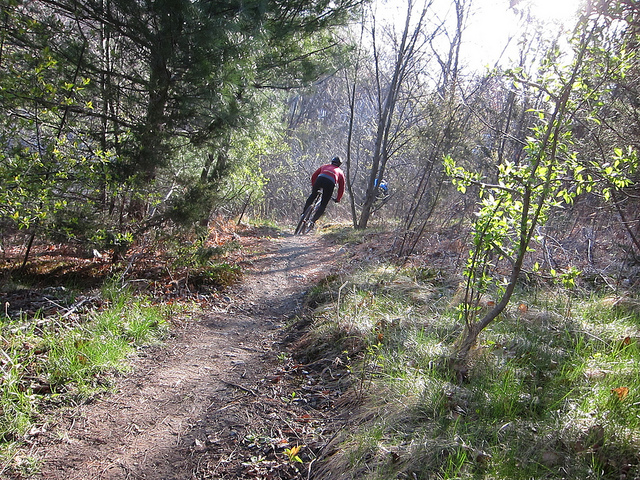
flying up some singletrack

We’ve already talked about Going Up, Going Far and Going Fast.  Going to the Woods is another thing we like to do, riding the jeep tracks and trails that crisscross our New England forests. We design bikes to go there in a few different ways.

Two crucial variables for any woods-oriented bikes are traction and speed. How will we keep the wheels on the ground, and how fast do we want them to move? Suspension is an option with our classic NE hardtail mountain bikes, the Solas and 622M SLX. They’re built to be fast over chattery, heavily-rooted ground and to climb the short, steep pitches we find all over. The Ti chainstays on these bikes act as de facto suspension systems, effectively keep the rear tire planted on the ground and rolling forward. For dirt road bikes, we can narrow the tires and build around a rigid fork, which will speed things up on less technical terrain.

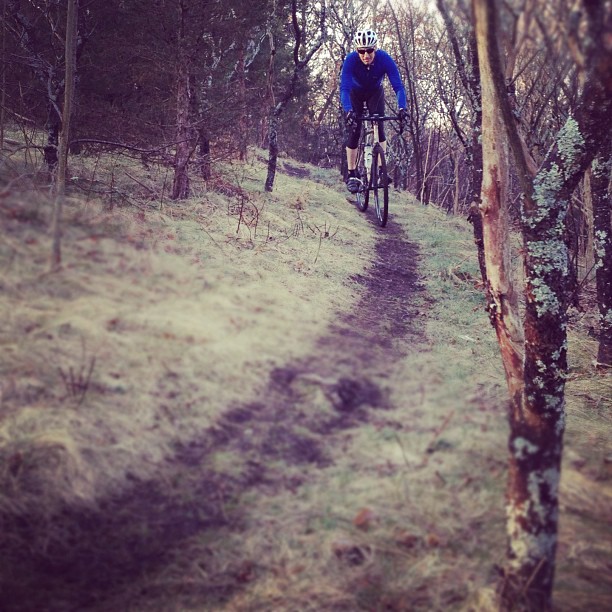
Tim descents some lovely singletrack

Another key question is, how much ground are we trying to cover? Are typical rides of approximately the same length, as with a cross country race bike, or do they vary wildly, with marathon trail sessions coming as often as possible. Those two bikes differ geometrically, one built for agility and speed, the other for comfort and stability. We can build them as traditional trail bikes, or with rack mounts for bike-packing. Geometries can get more relaxed or more aggressive.

We also send our Evergreens and Expats to the trees. The Evergreens are designed to tackle mixed-terrain, some road, some dirt. The Expats are touring bikes. As with the other types of bikes we design, finding the balance points is key to delivering the right bike. Going to the Woods can add as many or more different variables than the bikes we’ve discussed in previous pieces, so working through all the basic questions is integral to the process.


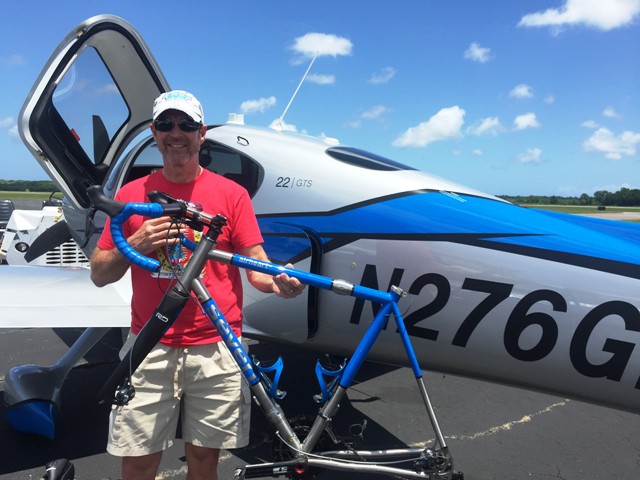
Russ’s Airheart SL

Russ' Airheart SL ready for flight

This is Russ and his Airheart SL. When we started building the Airheart line, the idea was to build the ultimate travel bike, easy to break down, pack and put on an airplane. Russ took this idea to its logical conclusion by having us build this bike to match his plane, which he flies to places he wants to ride. It’s so staggeringly brilliant, we had to share. We’re not all lucky enough to know how to fly, but we like to think that, if we weren’t so busy building bikes, we’d be doing exactly what Russ does.

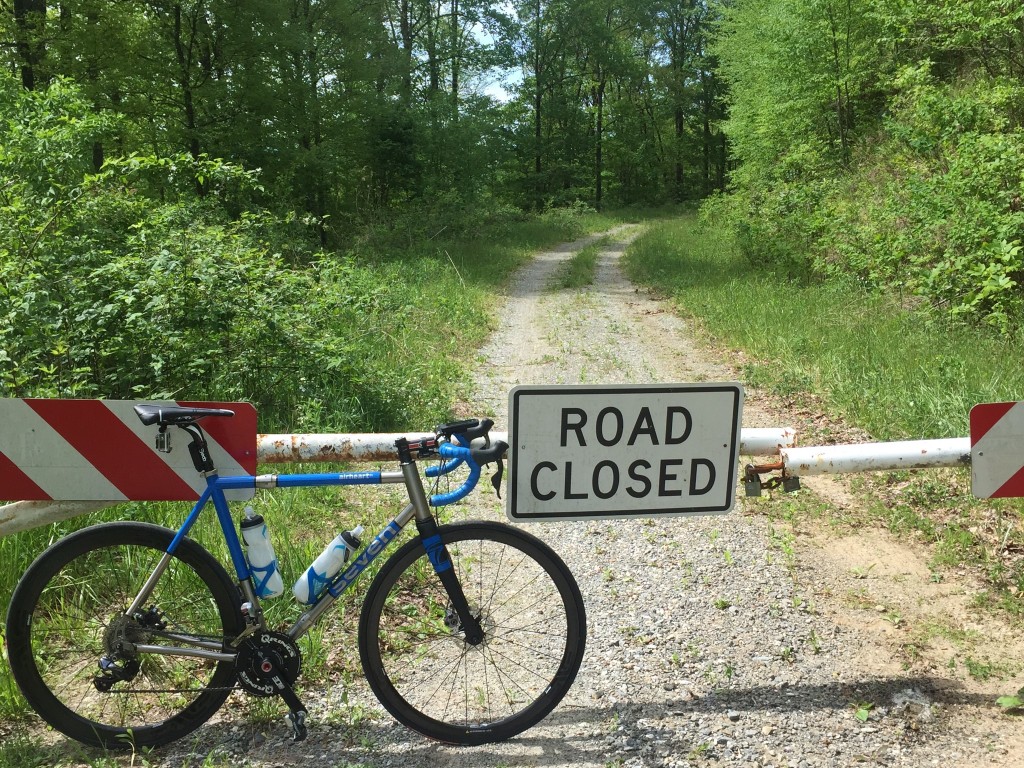
Road Closed

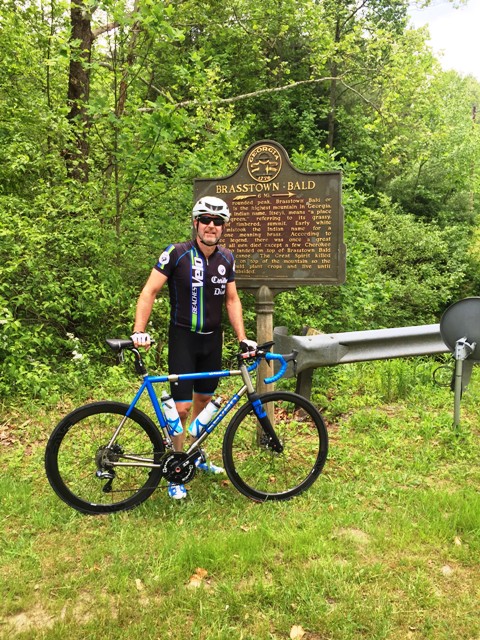
Russ's Airheart SL at Brasstown Bald

Russ says:

LOVE my new bike. Rode it this morning…..first split dialing it in, then joined our Saturday group and kicked it in for rest of ride. Thought I might struggle with the pace given I put a compact crank on it but I was off the front a couple of times! Now I’m going to take it apart and pack it up for trip. 

Thanks again! 

Russ

Robert’s Elium SL

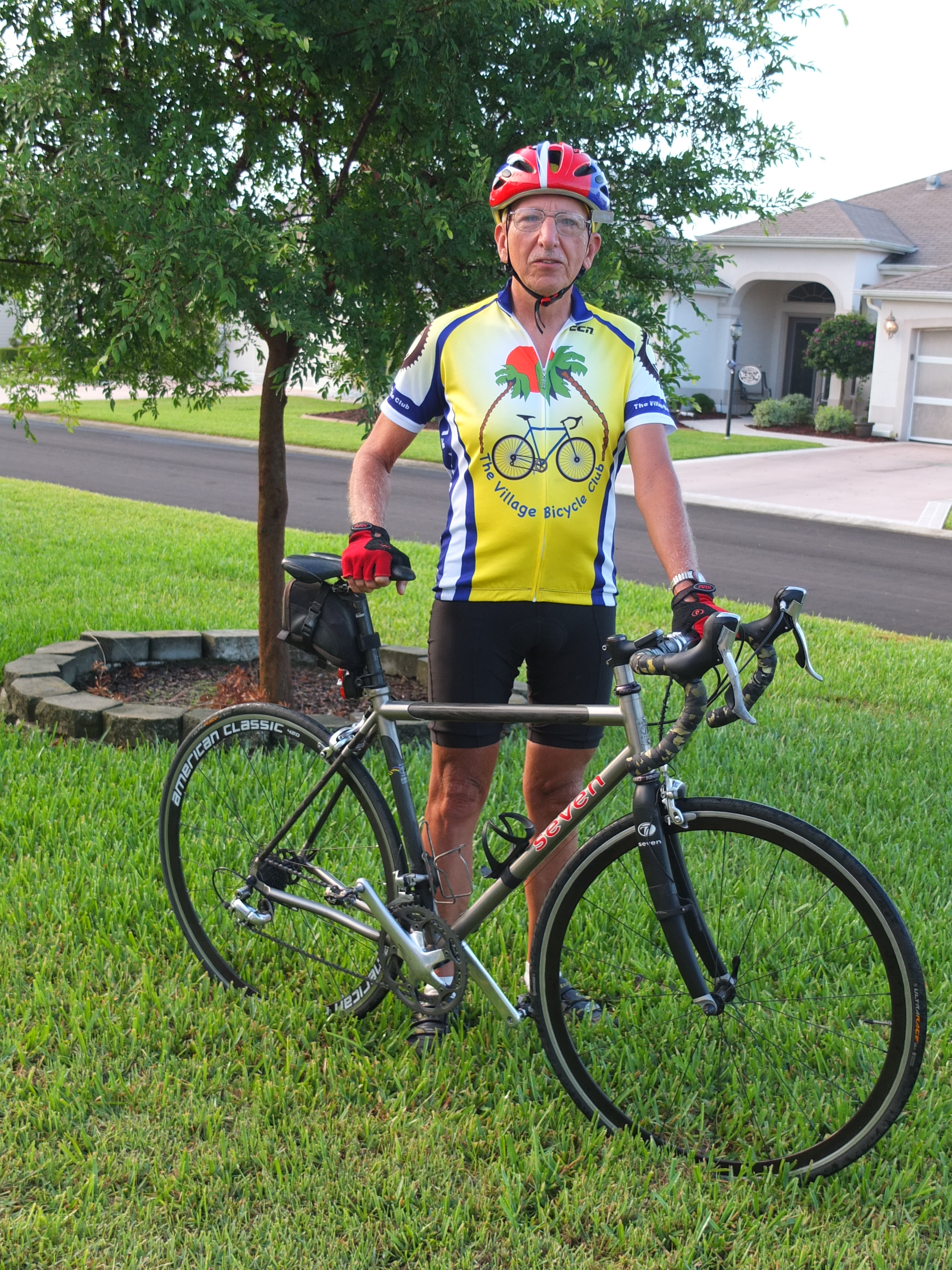
You don’t imagine what people will do with your bikes when you build them, or if you do try and envision what life the bike will live, you don’t dare to think it will carry people as far as it sometimes does. We build lifetime bikes, but it’s the rider that gives the bike that lifetime. We got this photo and note from Robert, down in Florida where he has put his Elium SL (an Elium SG when he bought it) to very good use.

Robert and his Elium SL


I found it timely to receive this recent newsletter from Seven Cycles.  My Seven Elium just reached a milestone.  As of today, it has 50,030 miles on it.  Twice around the world.

This bicycle has been a joy to ride since the first day.  Even at 50,000 miles, it has almost all the original Ultegra components.  Shifters, brakes, crankset, derailleurs, and bottom bracket are all original.  The headset is original.  I have replaced the chain 4 times, the cassette twice, and the shifter cables several times.

The next 50,000 may take longer, but I hope to see this bicycle reach 100,000.  Thank you for building such a fine bicycle.

Robert

Going Fast

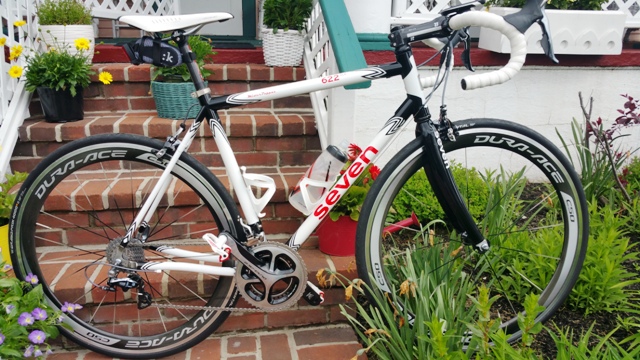
Axiom SL side view

In the last few weeks, we’ve talked about Going Up, the process of designing a climbing bike, and Going Far, the things that go into a long distance bike, which might be a century bike, a touring bike or might be a full-blown randonneuring machine. This week we turn our attention to race bikes.

The bike industry has traditionally worked backwards from race bikes to fill shop floors with race look-alikes for everyday riders who will never turn a crank in anger. What is good for the pros, so the logic goes, must be good for you, too, and for some very small number of non-pro riders, that could be true.

As with all our bikes, we start with the purpose of the bike and work forward. Going fast requires being able to sit in a comfortable, aerodynamic position, to be able to handle your bike in tight spaces, and to get good power transfer through the rear triangle.

As custom builders, getting to that perfect position is a given. We can replicate exact saddle and grip positions from a bike fitting. We can dial in handling by adjusting headtube angle and fork rake to produce the exact characteristics the rider wants. We can adjust the stiffness of the rear triangle by selecting specific diameter chainstays, up to and including the 1″ stays we call “race stays.”

Our 622 SLX rivals all of today’s carbon race machines for weight and stiffness, but it incorporates more road feel and better comfort than those bike through its unique combination of laser-cut titanium lugs and filament-wound carbon tubing. Our all-Ti Axioms make great criterium bikes for their ability to absorb the heavy impacts of racing on imperfect pavement and the way they come through the occasional crash.

The technology of race bikes evolves quickly, and adapting to new component standards can be a challenge, but with a custom bike these things can be considered during the design phase to leave you with as many upgrade options as possible.

The thing is, bikes aren’t fast. Riders are fast. The best way for the rider to Go Fast is to design a bike around them that fits them perfectly, handles the way they want it to and transfers as much of their power as possible.