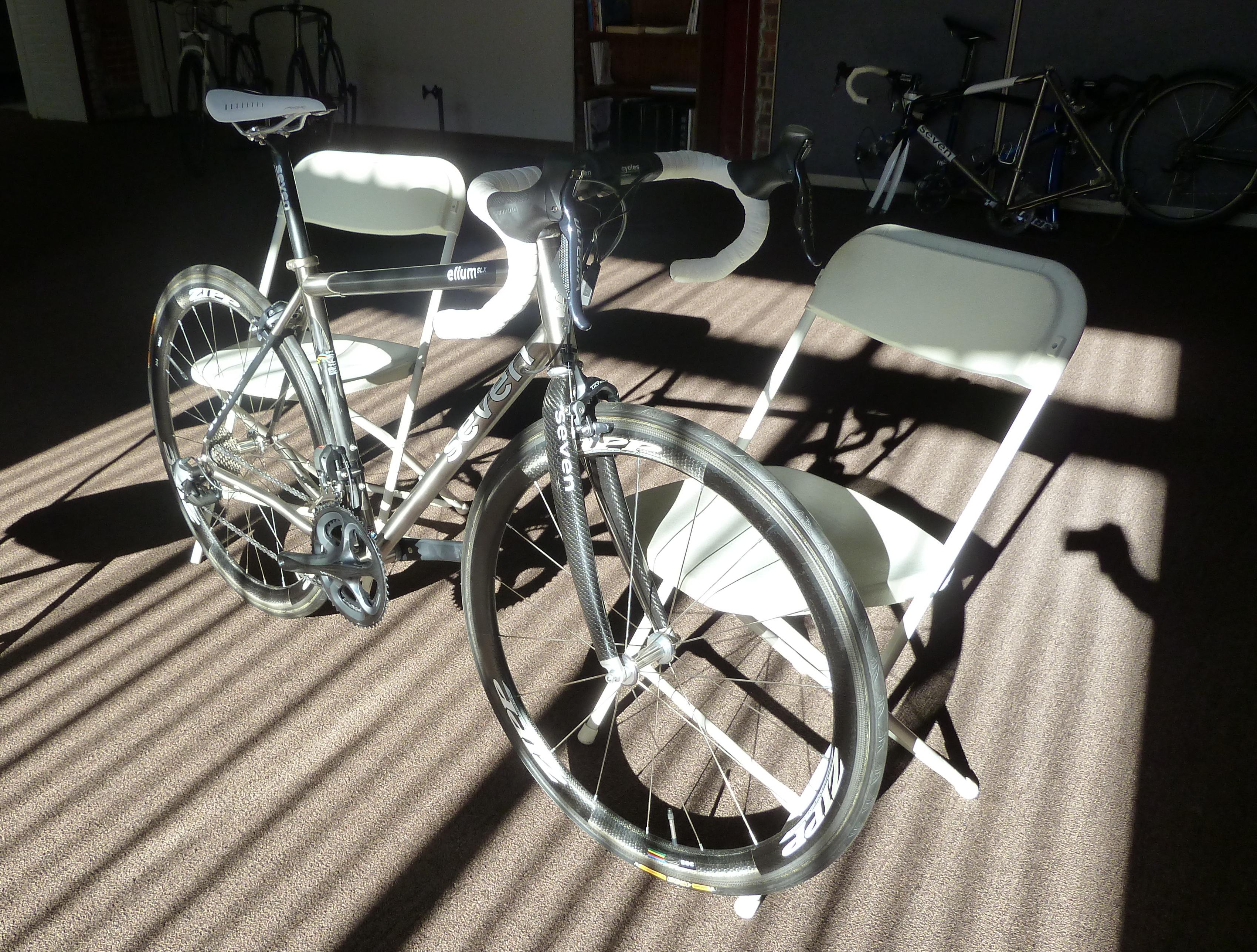
Our showroom, such as it is, is a beautiful space, with vaulted ceilings and a generous supply of natural light. In the morning, the sun slants in through the blinds and bathes the few bikes that live there in a warm glow.
Invariably, we display our project bikes there. The Berlin Bike is often in residence. The Bicycling Magazine bike has been a frequent occupant. But, also invariably, those bikes want to go out to bike shops for display or for special events.
Today, just today, the bikes in the showroom consist of: Rex, the very first Seven, the primogenitor, the bike that spawned all others; Rob’s belt drive Cafe Racer with custom Tiberius handlebar and S&S frame couplers; Karl’s Elium SL, all carbon lightness in a pure-speed build.
We should make clear that employee bikes end up in the showroom quite a bit. Back at home, garages and storage rooms struggle to accommodate all of our cycling predilections. It ends up being a symbiotic arrangement. The showroom gets beautiful bikes to display. And our loyal Seven staff get more space for even more bikes.
There are a few frames hung in one corner, examples of our best custom paint work, and a pair of Elium SLXs with internally routed Di2 builds. They’re on their way out, demo bikes for shops who want the very latest in their own showrooms.
We joke a lot about the showroom. What do you call a bike company with no bikes? More than once, a passing tour has offered to buy an employee’s bike right off the display rack. It’s good to make a product you can’t keep in stock. It’s the problem you want to have.
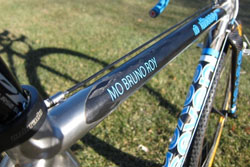
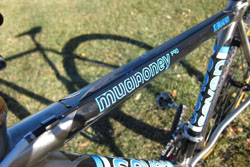
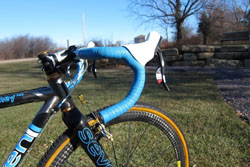
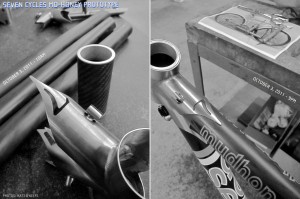
When Seven Cycles put Maureen Bruno-Roy (MM racing) on their new prototype carbon fiber and titanium cyclo-cross bike, the top tube said ‘Mohoney’ – a play on the name of their Mudhoney ‘cross line. The Mohoney has since turned into the Mudhoney Pro, which will be a production bike in 2012.
The new bike, which was released as a prototype in October, incorporates additional carbon tubes into its design, when compared to the Mudhoney SLX bikes that Bruno-Roy has ridden for the past four seasons – not just the same model mind you, but the same exact frames.
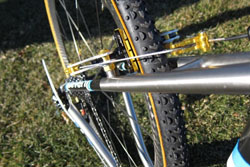
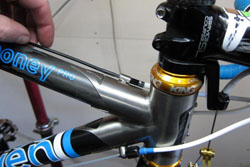
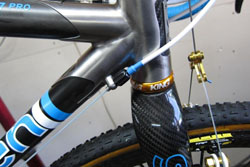
While the SLX has carbon top and seat tubes, the Pro trades out its titanium seatstays, head and down tubes for carbon as well, in an effort to lighten the frame and further dampen the vibrations that reach the rider, while retaining the terrain hugging suppleness and feel of titanium.
Bruno-Roy’s Mohoney race rig was the first ’cross bike Seven assembled with carbon rear stays, which are an adaptation from the company’s Elium SLX and 622SLX road bikes. “This rear triangle was completely novel for them, in terms of ’cross,†Matt Roy, Bruno-Roy’s husband, team manager and mechanic, told BikeRadar. “So this was the first one and it became the basis for the new Mudhoney Pro.â€
Rob Vandermark, Seven’s founder, laser-cut all of the titanium lugs for the Mohoney frame by hand. On the SLX these lugs are structural but on the Mudhoney they’re there purely for aesthetic reasons, as the carbon tubes are mitered and bonded to each other. The new bike is roughly 1lb lighter than Bruno-Roy’s SLX rigs. “I don’t think they expected it to be that much lighter,” said Roy.
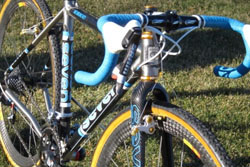
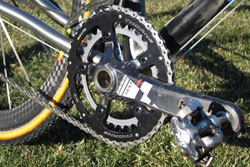
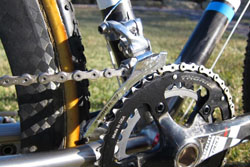
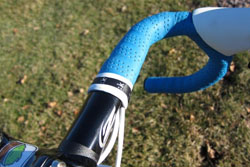
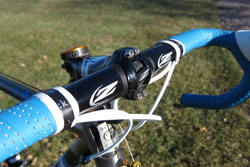
Bruno-Roy’s Mudhoney Pro gets the SRAM treatment, in terms of groupset and accompanying kit – Red with a compact crank and 44-tooth Thorne Components outer ring, and Zipp’s Service Course alloy cockpit. The handlebar is Zipp’s new Service Course CSL, which is made especially for smaller handed riders and has a ‘super-short reach’ and two-degree outward bend in the drops.
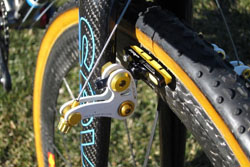
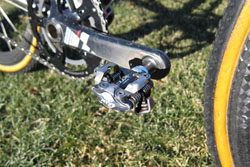
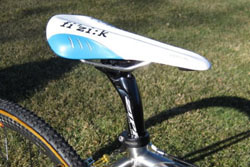
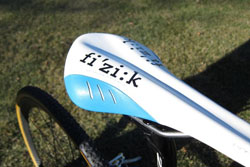
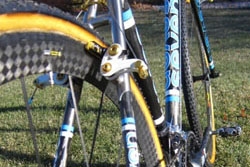
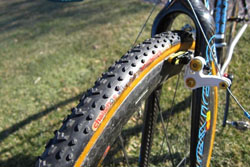
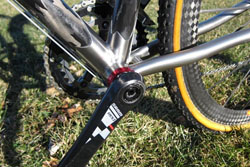
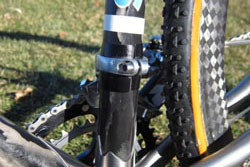
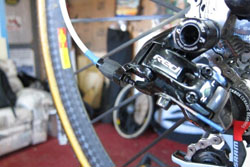
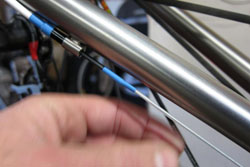
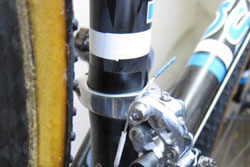
A compact gxp crank with 34-tooth sram inner ring and 44-tooth thorne outer ring: a compact gxp crank with 34-tooth sram inner ring and 44-tooth thorne outer ring Mo uses a 44-tooth outer ring. Since SRAM only make a 46t ring, she opts for one from Stu Thorne’s Thorne Products. Also note the ‘late model’ Shimano PD-M970 pedals, which remain more popular on the cyclo-cross circuit than the M980 model due to their better mud performance Deviations from the SRAM brand come in the form of Bruno-Roy’s TRP EuroX Mag brakes and Mavic wheel choices. She has both Cosmic Carbone Ultimate and R-SYS SL tubular models. The former are mostly used with Challenge Grifos (with both standard Challenge and FMB casings), whereas the R-SYS are set for mud with Challenge Limus and FMB Super Mud tires. Roy takes a meticulous approach to the upkeep of his wife’s bikes and it shows through in the finished product. When we saw the bike the day before the USA Cycling cyclo-cross nationals in Madison, Wisconsin it sparkled and gleamed, with touches like fully sealed and shrink wrapped cables, custom stickers on the Fi’zi:k TK saddle and an expertly taped handlebar.
Complete bike specification
Frame: Seven Mudhoney Pro prototype
Fork: Seven CX
Headset: Chris King NoThreadset, 1-1/8in
Stem: Zipp Service Course SL, 80mm, -6°
Handlebar: Zipp Service Course CSL, 40cm
Tape: Fi:zi’k Microtex Bar:tape
Front brake: TRP EuroX Mag w/ SwissStop Yellow King pads for Mavic wheels
Rear brake: TRP EuroX Mag w/ SwissStop Yellow King pads for Mavic wheels
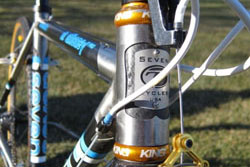
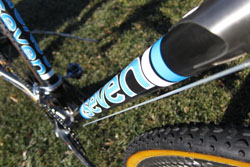
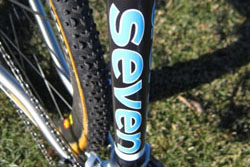
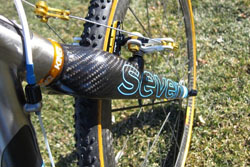
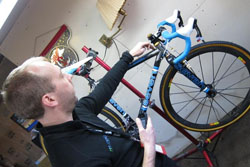
Maureen Bruno-Roy’s Seven Mudhoney Pro prototypeBruno-Roy sticks with TRP’s old-school EuroX Mag wide-profile brakeBruno-Roy’s Mudhoney Pro carried her to a top 10 finish at the 2012 USA Cycling national championshipsSwissStop Yellow King pads for the TRP EuroX brakesA compact GXP crank with 34-tooth SRAM inner ring and 44-tooth Thorne outer ringShimano’s stalwart XTR M970 pedalFi’zi:k’s Arione Donna women’s saddleMatt Roy hand placed the Fi’zi:k logosThe Mudhoney Pro uses a carbon head tube that’s wrapped in titanium. Mo’s is just 90mm tallThe Mudhoney Pro also employs a carbon down tube…… and a carbon seat tubeThe mixed carbon-Ti seatstaysThe Ti sheaths extend so to hold the brake bossesMo’s bikeInspiration from the mechanic – that’s an alien with a ray gunThe steel caged SRAM Red front derailleurSeven’s carbon CX forkRoy uses Aquaseal on the sidewalls of Challenge’s GrifoThe Mohoney turned into the Mudhoney ProAn expert tape job with a custom finishZipp’s Service Course cockpitThe Service Course CSL bar has a compact bend with a super-short reachThe Red GXP ceramic bottom bracketRoy finds that clamp-style front derailleurs are stiffer and shift better; Seven use a set of shims to more evenly distribute the clamping load on the carbon seat tubeMechanic Matt Roy running us through Mo’s bikeCustom sealed cablesRoy uses shrink tubing found at electronics stores to seal the cable systemHe even seals the cable as it exits to the rear derailleur anchor boltMore custom sealingSeals on the front derailleur; Roy also uses the shrink wrap as a cable end cap
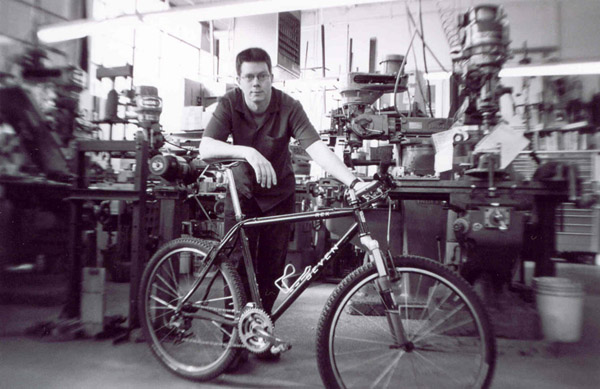
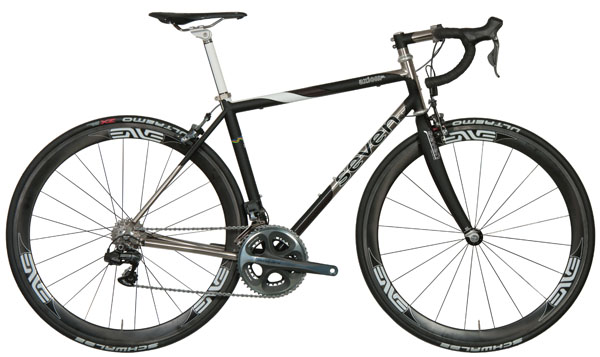
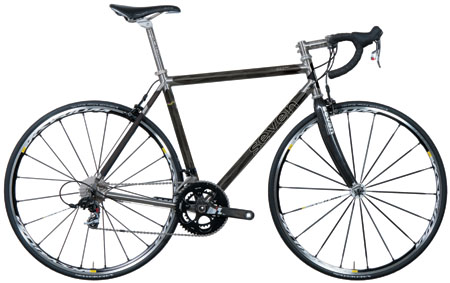
Since opening in 1997, Massachusetts-based Seven Cycles has produced everything from belt-drive commuters to carbon-fiber time-trial bikes. But Seven’s beating heart has always been custom titanium, a legacy of founder Rob Vandermark’s long tenure at one-time industry leader Merlin Metalworks. When he left, he took his vision and expertise (not to mention several employees). If you want a Merlin today, you buy a Seven. The Axiom SL, Seven’s most traditional and versatile frame, is a study in the company’s philosophy: Fit and ride quality are paramount, while character and performance are almost infinitely malleable. A dream bike is not just a machine: it’s a deeply personal expression of a rider’s self, entrusted to master craftsmen to interpret and make real. We do not choose lightly whom to entrust with those dreams; with our test Axiom SL, as with thousands of frames before it, Seven has earned that trust.
The Axiom is not going to be mistaken for a top-drawer carbon race bike. It flexes, but in doing so shows it’s alive. Seven can tune even more stiffness into the bike, but I wanted a more balanced ride. This bike proves that you don’t need carbon for performance. Like other custom shops, Seven can build in a BB30 bottom bracket, but this bike is wonderfully reverent, with a traditional 68mm BB shell and a straight 1 1/8-inch steerer tube with a standard King headset. Though the bike isn’t the lightest, at 16.04 pounds for a 54cm, it climbs as well as, or better than, bikes that weight much less.
This Axiom uses a very neat Di2 setup, with just three holes in the frame—near the head tube for the wiring harness, and at the seat tube and chainstay for each of the derailleur wires. The battery is housed in the seat post, which gives the bike a clean and stealthy look. Should you ever decide to go back to mechanical, you could get cable stops on the frame even after the fact.
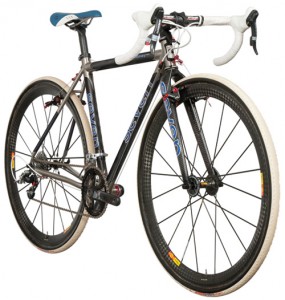
A Seven Cycles 622 SLX road bike (www.sevencycles.com). I’m an avid cyclist. This bike is new for the 2012 model year for Seven and it is their lightest production frame to date. Each Seven bicycle is custom made in Watertown for the rider’s specific body type and riding style. It’s a beautiful marriage of carbon and titanium. Or an Evoluzione Range espresso machine from Rocket Espresso is the Ferrari of espresso machines and would be a perfect addition to my home kitchen.
If you’ve ever been over your handlebars into a sand pit, you know that the forces that come to bear on a cyclocross bike can be both unexpected and catastrophic. You also know that trying to get all that sand out of your mouth is much more complicated than simply swishing some post-race beer around and then spitting, like you were at the outdoor dentist.
Because of the big hits a typical CX race bike takes, we think that a pure carbon frame is the wrong tool for the job. There simply isn’t enough forgiveness in that material to justify the weight savings you would get over a metal bike. That doesn’t mean carbon fiber has no place on the course though.
Carbon fiber is good at two things. First, it eats high-frequency vibration better than metal, so having some carbon in your CX frame is good when you’re flying over grass or even grinding a big gear on a paved section. You’ll be smoother and get better power transfer. The other thing carbon fiber is good at is being light. Light can be good when you’re racing, right?
But it’s not everything.
Metal is good at some things, too. Titanium, for example, will give a frame a suppleness and a maneuverability that an all-carbon fiber frame doesn’t have. In the technical section of any course, in the switchbacks or in the mud, titanium will give you the ability to use your whole body to steer with. A titanium drive train will be easier to power in chattery sections than a carbon one. Sometimes a little flex is a good thing.
At Seven, we have the ability to build an all-carbon cyclocross racer and make it every bit as customizable as any of the other bikes we build. When we set out to expand our cross line though, an all-carbon bike never even crossed our minds.Instead we built the machine that would come to be known as the Mudhoney PRO.
The 2012 Mudhoney PRO
The Mudhoney PRO aspires to wring every last advantage out of the two materials in its design. The carbon fiber top, seat, head, and down tubes form a light triangle. Matching seat stays settle your saddle. By putting titanium lugs and chainstays into the mix, we getsuppleness where we want it, plus added durability. A titanium drive train will improve tracking and traction; it will hold the ground better than a carbon one, especially in the more technical sections.
Marrying materials in this way isn’t easy; it takes advanced bonding techniques to gain all these advantages and still be able to offer a lifetime warranty. Luckily, we’ve been mixing titanium and carbonsince 1997.
We can’t guarantee you won’t go over the bars of the Mudhoney PRO. When it comes right down to it, sand is unpredictable, and we could all use more practice carrying momentum from the fast parts of the course into the technical sections. What we will say is that you won’t find a cross racer that trackstruer and holds the ground better. And there’s always that post race beer to look forward to.