skip to content
Current Lead Times: Rider-Ready Framesets: 4 weeks. Full Custom Bikes: 7 weeks.

Building Your Titanium and Carbon-Titanium Bikes in the USA for 29 Years

boston.com: Make a Holiday Wish

By Luke O’Neil

We ask local celebrities and people of influence what gift(s) they want

SEAN GRIFFING, co-owner of Trade

Odonata

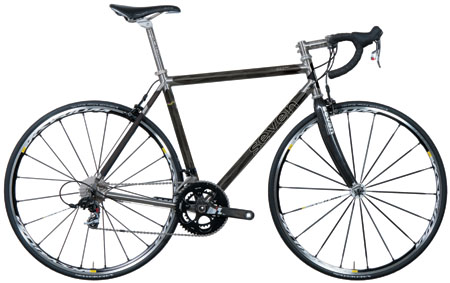
A Seven Cycles 622 SLX road bike (www.sevencycles.com). I’m an avid cyclist. This bike is new for the 2012 model year for Seven and it is their lightest production frame to date. Each Seven bicycle is custom made in Watertown for the rider’s specific body type and riding style. It’s a beautiful marriage of carbon and titanium. Or an Evoluzione Range espresso machine from Rocket Espresso is the Ferrari of espresso machines and would be a perfect addition to my home kitchen.

ProCycling Magazine: Wish List – The World’s Best Cycling Kit

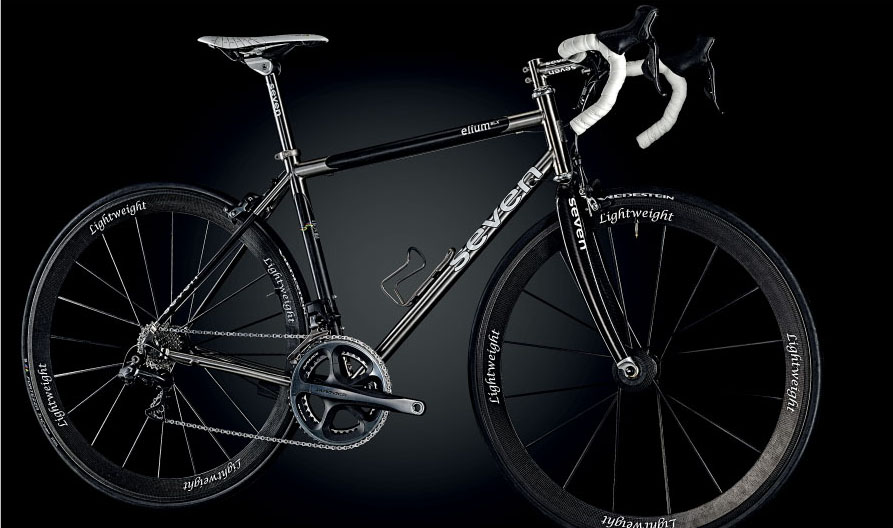
Elium SLX

Elium SLX

Made in Massachusetts, USA, the Seven Elium SLX incorporates a carbon fibre toptube, seat-tube and seatstays into a titanium frame. The idea is to combine the ride qualities of each material to create a light, responsive and supremely comfortable frame. This bike, built in Lottery-win spec with Dura-Ace Di2 and Lightweigth wheels, weigths 6.86kg without pedals yet is rated for riders up to 110kg. Options include a longer headtube, pump peg, single and fixed gear, Di2-specific cable-routing and custom colours.

Bicycling – Dream Bikes: Rides Like a Dream: Axiom SL

Traditional Ti with Unmatched Heritage

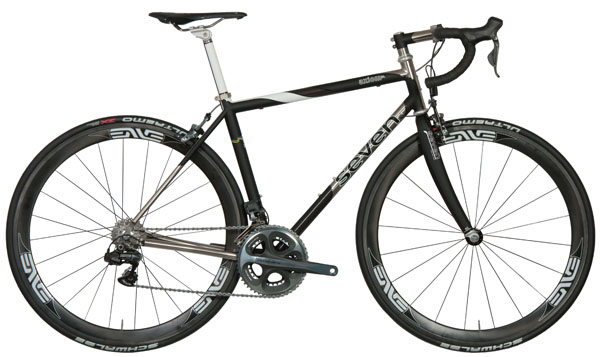
Seven Axiom SL

Since opening in 1997, Massachusetts-based Seven Cycles has produced everything from belt-drive commuters to carbon-fiber time-trial bikes. But Seven’s beating heart has always been custom titanium, a legacy of founder Rob Vandermark’s long tenure at one-time industry leader Merlin Metalworks. When he left, he took his vision and expertise (not to mention several employees). If you want a Merlin today, you buy a Seven. The Axiom SL, Seven’s most traditional and versatile frame, is a study in the company’s philosophy: Fit and ride quality are paramount, while character and performance are almost infinitely malleable. A dream bike is not just a machine: it’s a deeply personal expression of a rider’s self, entrusted to master craftsmen to interpret and make real. We do not choose lightly whom to entrust with those dreams; with our test Axiom SL, as with thousands of frames before it, Seven has earned that trust.
The Axiom is not going to be mistaken for a top-drawer carbon race bike. It flexes, but in doing so shows it’s alive. Seven can tune even more stiffness into the bike, but I wanted a more balanced ride. This bike proves that you don’t need carbon for performance. Like other custom shops, Seven can build in a BB30 bottom bracket, but this bike is wonderfully reverent, with a traditional 68mm BB shell and a straight 1 1/8-inch steerer tube with a standard King headset. Though the bike isn’t the lightest, at 16.04 pounds for a 54cm, it climbs as well as, or better than, bikes that weight much less.
This Axiom uses a very neat Di2 setup, with just three holes in the frame—near the head tube for the wiring harness, and at the seat tube and chainstay for each of the derailleur wires. The battery is housed in the seat post, which gives the bike a clean and stealthy look. Should you ever decide to go back to mechanical, you could get cable stops on the frame even after the fact.

Cyclocross Magazine: The Green Mountain Double Century

Words & Photos by Natalia Boltukhova | Pedal Power Photography

Issue #14 of Cyclocross Magazine included a multi-page spread featuring some Seven bikes outfitted as randonneurs, and highlighting the riding and endurance skills of Matt Roy, David Wilcox, and John Bayley as they conquered the Green Mountain Double Century. Natalia Boltukhova of Pedal Power Photography captured some incredible images of these guys at every step of this grueling race, and she also wrote many tongue-in-cheek captions that, along with her photos, provide a vivid picture of that epic day. In the competitors’ own words, it was: “Insane. Nuts. Brutal. Inhumane.”

A little bit about the bikes:

  • John Bayley rode his Seven titanium Axiom SL with couplers. This bike is set up as a true Randonneur bike.
  • Matt Roy rode a Seven titanium Axiom SL Randonneur bike.
  • David Wilcox rode his Steel Vanilla Randonneuring bike.

Matt Roy had this to say about his experience on the Axiom SL Randonneur bike that day:

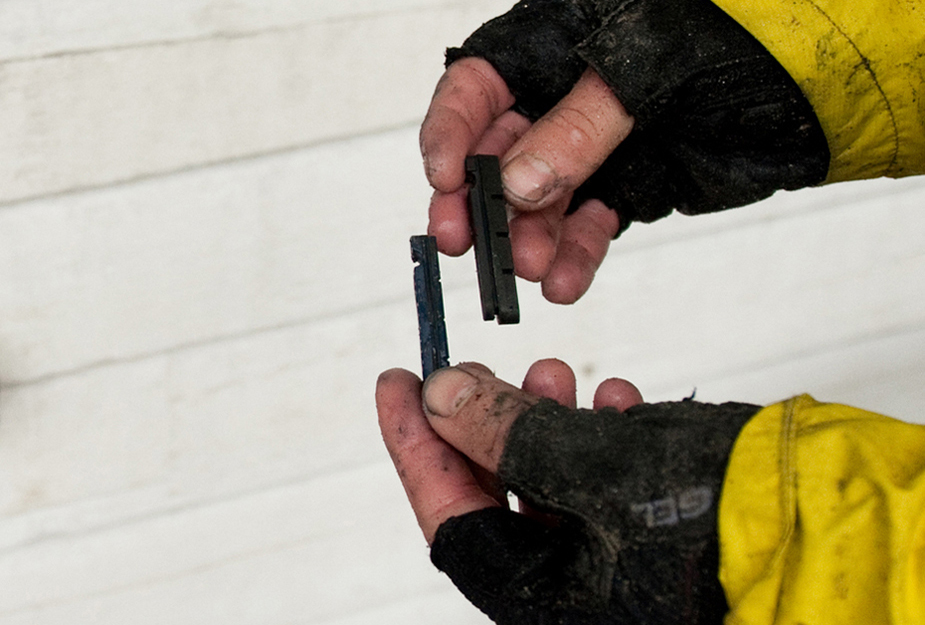
“The Axiom SL Rando project bike was great… I beat the living hell out of it. I wore through a set of brake pads in the first 100 miles. I can’t believe it showed up on my porch on Thursday morning and I put it through ungodly conditions less than 48 hours later. It handled amazingly well, climbed great, descended great, felt great!”

Read on to get the full stats of the race, including calories consumed and burned, feet ascended, and number of brake pads replaced, and to see the gallery of Natalia’s beautiful photographs.

Official Data

  • 205 Miles
  • 80% dirt roads
  • 25,000 fine Vermont feet of vertical climbing
  • [Winning] Team:Matt Roy, David Wilcox, John Bayley
  • Date: June 11, 2011
  • Start time: 4:01am
  • Projected finish time: 7:00pm-8:00pm
  • Actual finish time: 11:01pm
  • Weather Conditions: typical New England (rain showers, low 60s, overcast)
  • Total actual distance: 208.8 miles (according to Garmin 705)
  • Elevation gained: Approximately 25,000 feet
  • Total time: 18:52:27
  • Total ride time: 16:14:12
  • Average speed: 12.9mph
  • Calories consumed: approximately 6,150 (according to Matt Roy’s calculations—and he is some sort of medical scientist)
  • Calories burned: 15,810 (according to Garmin 705)
  • Flat tires: 1 (pinched on a rocky descent)
  • Brake pads replaced: 2 sets on Matt’s bike; David confessed he could have used a new set in the rear and has since replaced both sets in his bike; John attested to his brakes still having some life left over after the finish, but her remains unable to perform typing on his computer due to sore hands from braking on descents.
  • Hypothermia: barely avoided
  • Support crew: Maureen Bruno-Roy (Matt’s wife and one of New England’s top cyclocrossers in her own right, with super-human organizing skills, mind reading powers, brilliant off-road driving abilities, unsurpassed stamina and positivity-charging powers) and Natalia Boltukhova (photographer, and water bottle-and-what-have-you passer from the car)
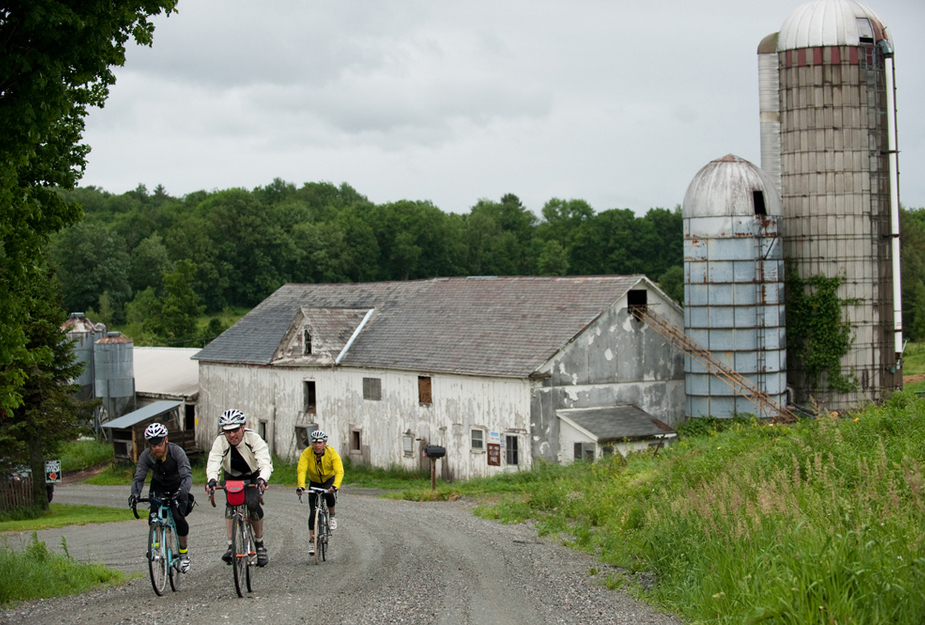
Three riders on a Vermont Road
Green Mountain Double Century, Or: Pretty Boys Explore Jens Voigtitude and Epicness on Vermont’s Gravel Roads
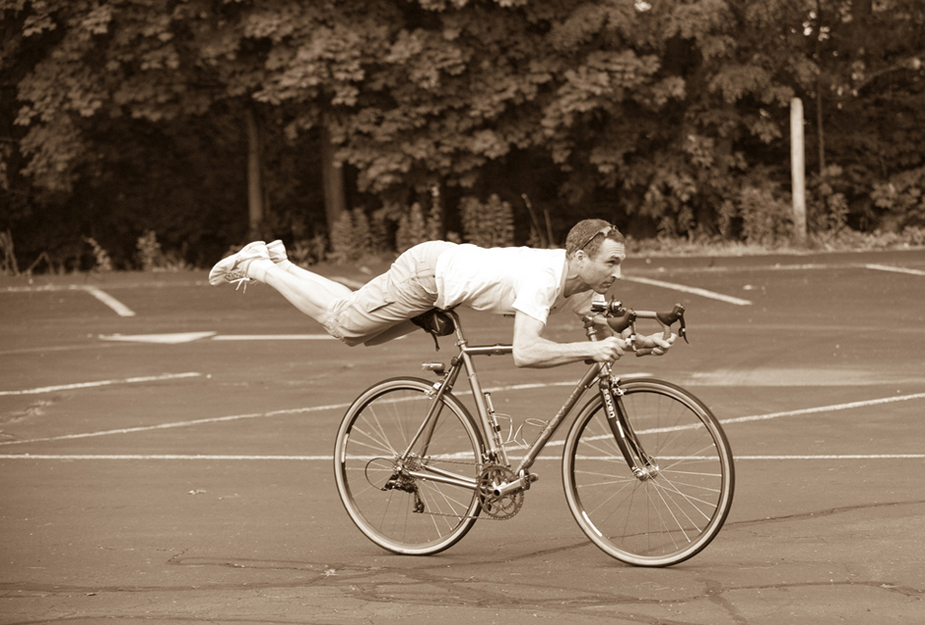
John Bayless superman on his Seven
I knew Irishmen were a little weird. I knew their accent makes it sound like they put an exclamation mark followed by a question mark followed by an ellipsis at the end of everything they say. Here’s John Bayley’s top secret spin the night before the Green Mountain Double Century (GMDC)
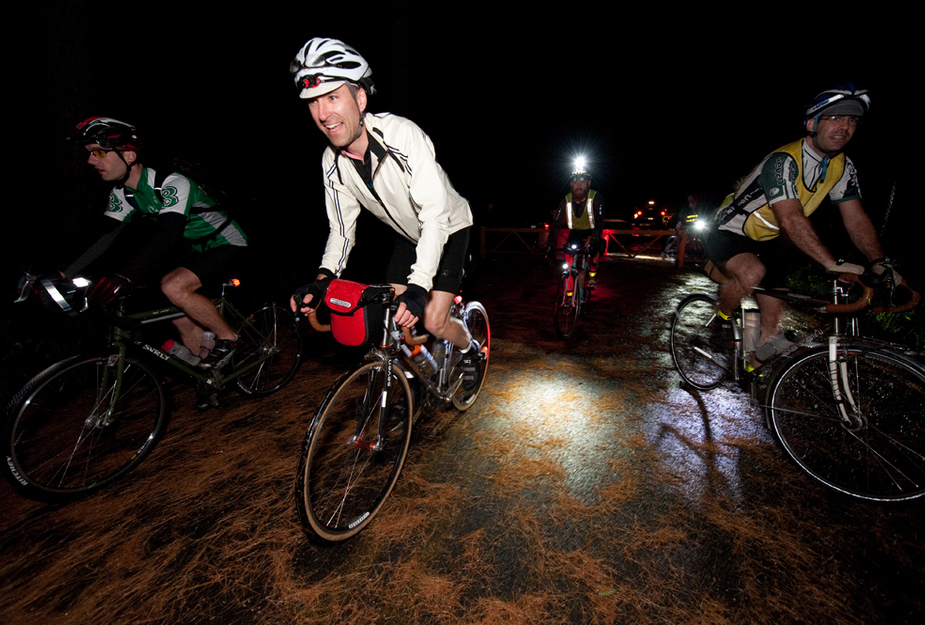
Green Mountain Double Century start
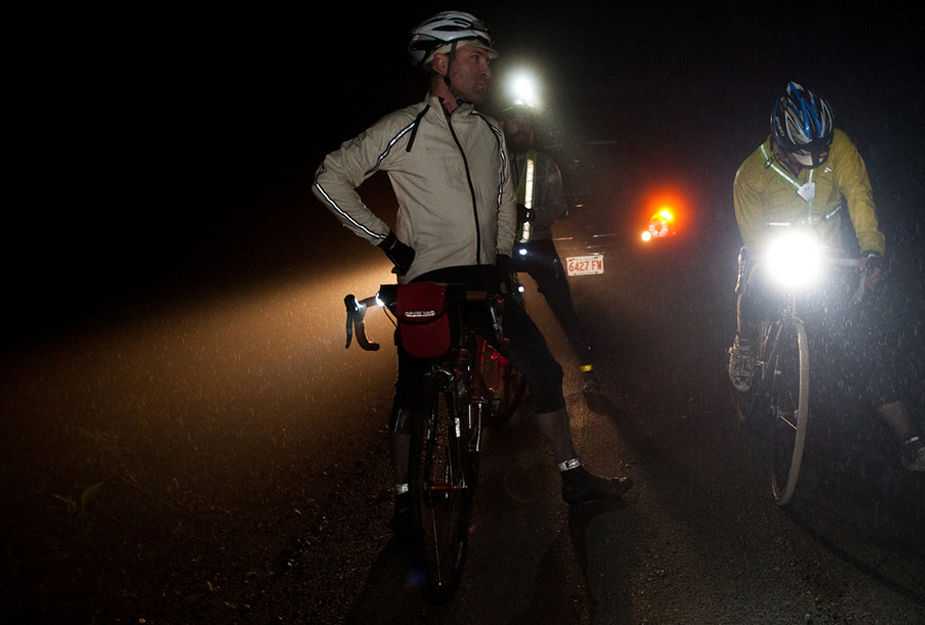
The riders started out in rain showers and pitch black darkness—so dark, in fact, that it was only later, when looking through the photos, that I was able to see the cool pine needle pattern on the ground and the excited faces of the riders rolling out.
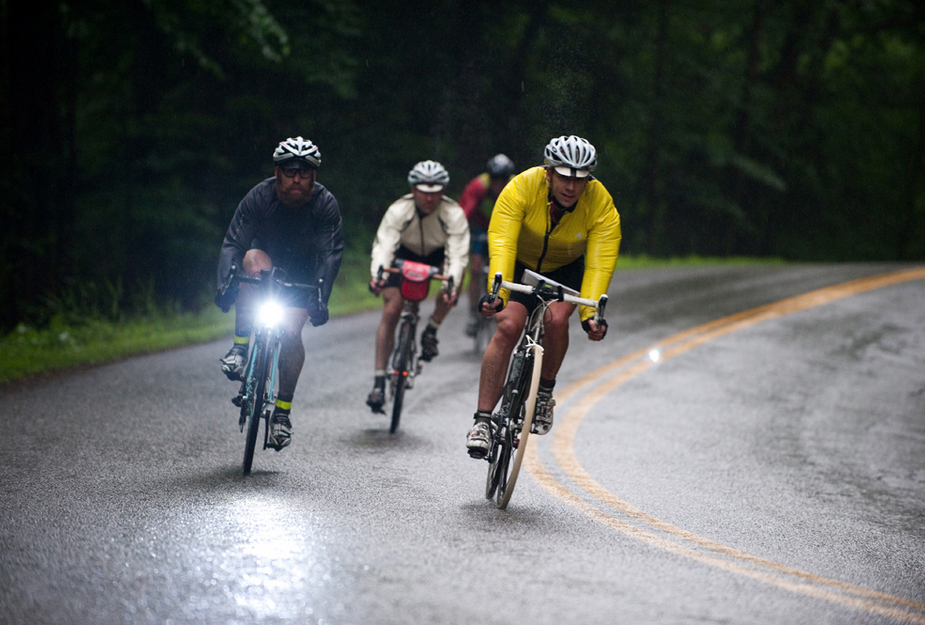
Cyclsts at sunrise
One of the very few paved sections of the GMDC, at the beginning of the ride as the sun started to rise. David Wilcox’s generator-hub-powered lights came in handy that day, as the sun never did fully emerge from behind the rain clouds. The fourth rider hung with the Great Trio’s deceivingly effortless pedal strokes, but was mercilessly dropped shortly after the shot.
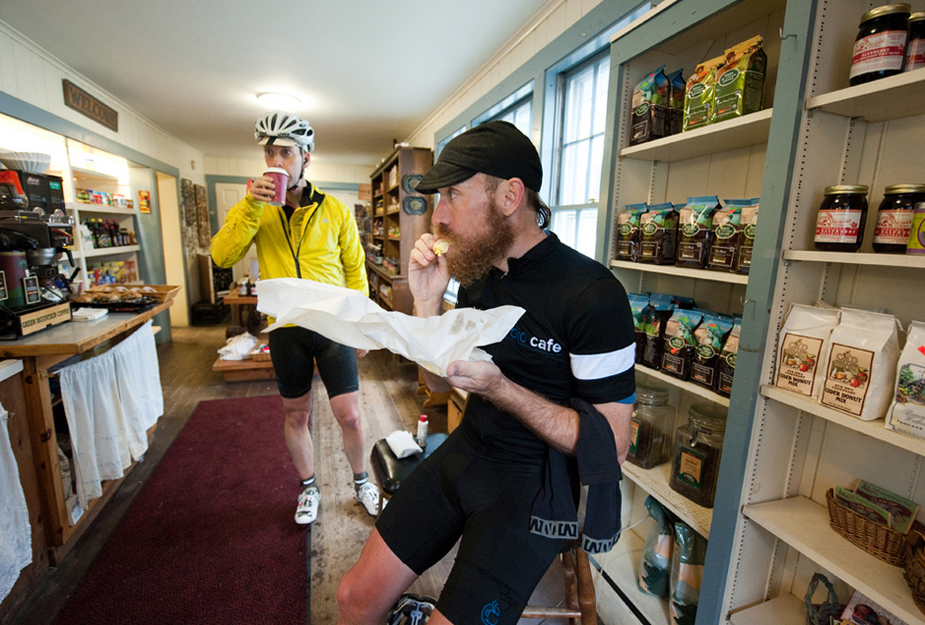
cyclsist eating at Grafton Village Convenience
The women of the Grafton Village Convenience Store went to great lengths to provide our intrepid, muddy, wet, hungry adventurers with fresh egg ‘n’ cheese sandwiches and, “still warm out of the oven” perfect blueberry muffins. The boys filled the pauses between devouring the country deliciousness by entertaining the locals, who were taken by surprise with this little tornado of cycling adventure.
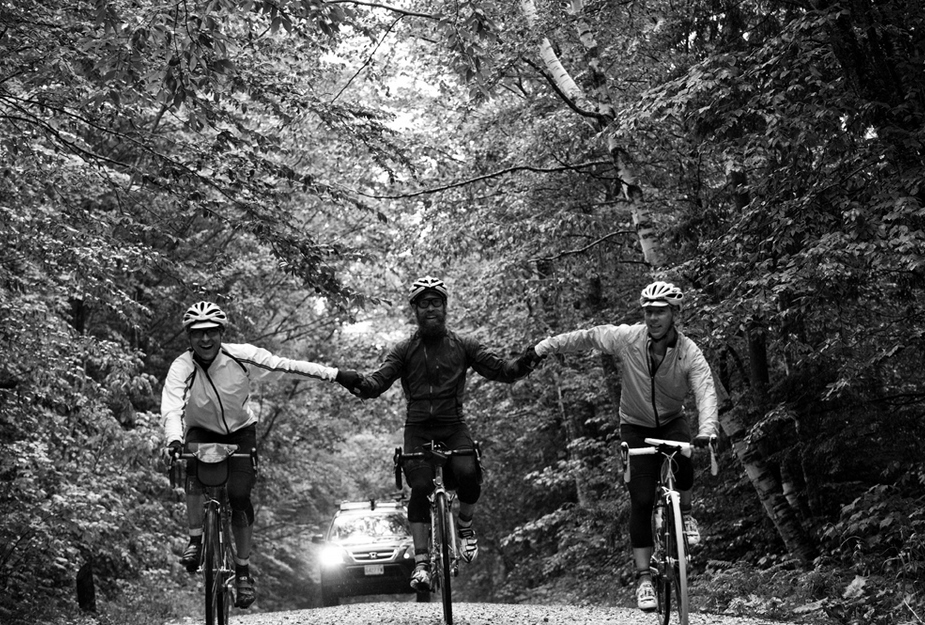
three rides smiling and holding hands
The three musketeers! Don’t try this at home.
brka pad wear
Matt showing off his brake pad that lived a very short but adventurous life.
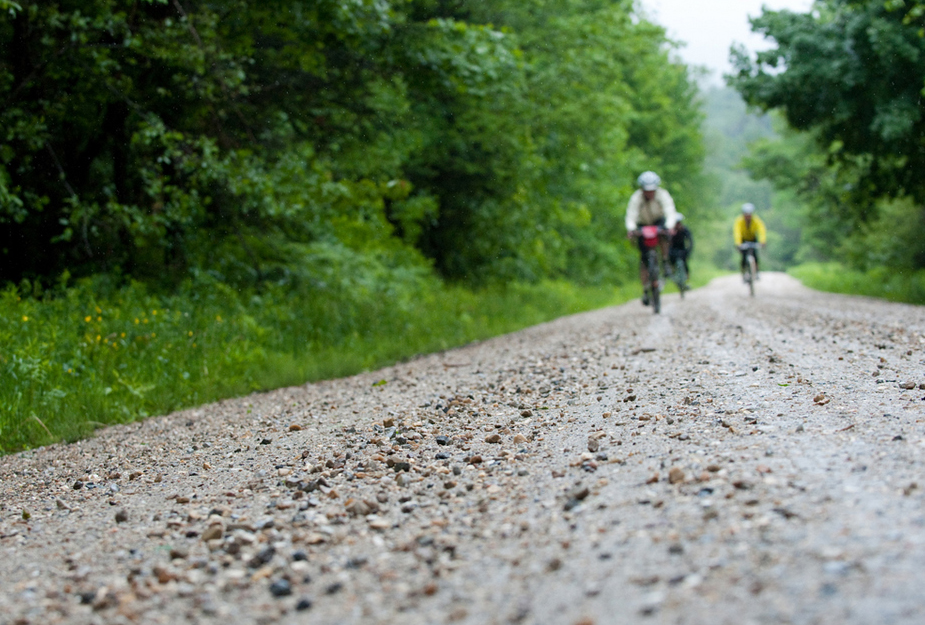
road surface
A glorious road surface, typical of 80 percent of the route.
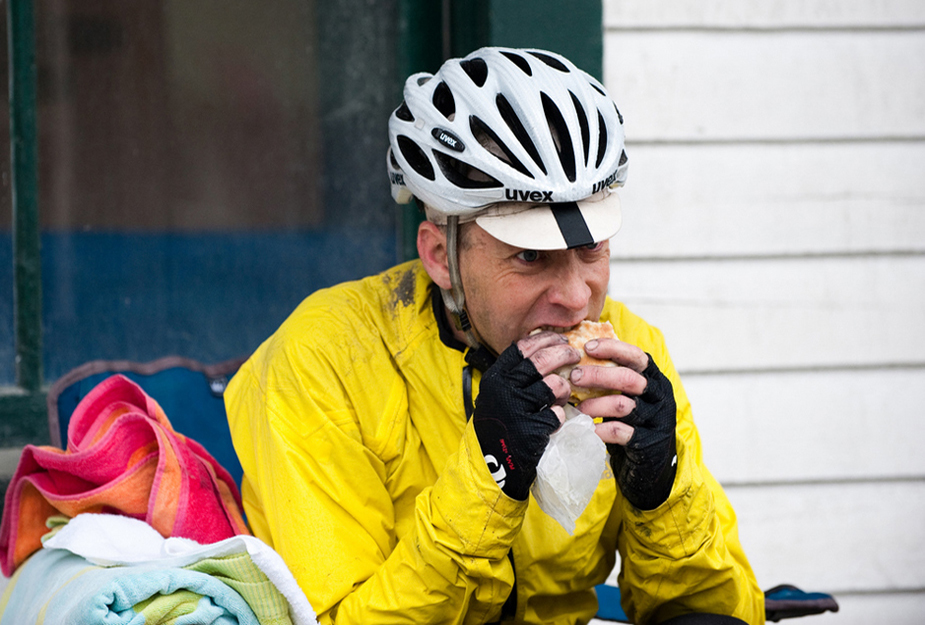
Matt Roy eats an egg sandwich
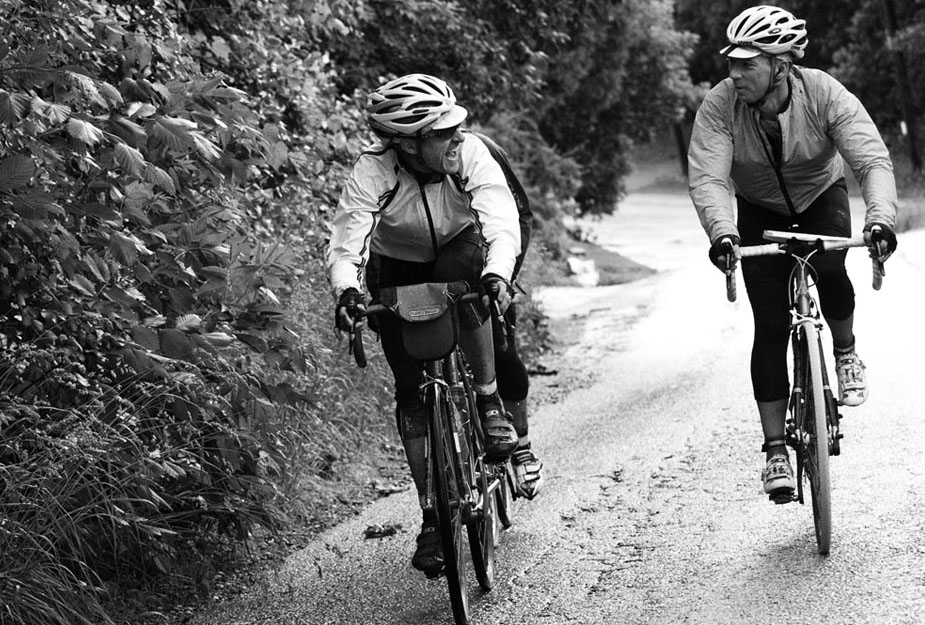
Egg sandwiches taste like heaven. Fact: Matt Roy is cute. Fact: it was only a matter of putting together a really long, mixed terrain journey so those two could get some quality time together.
Suffering side-by-side
The joy of suffering side by side.
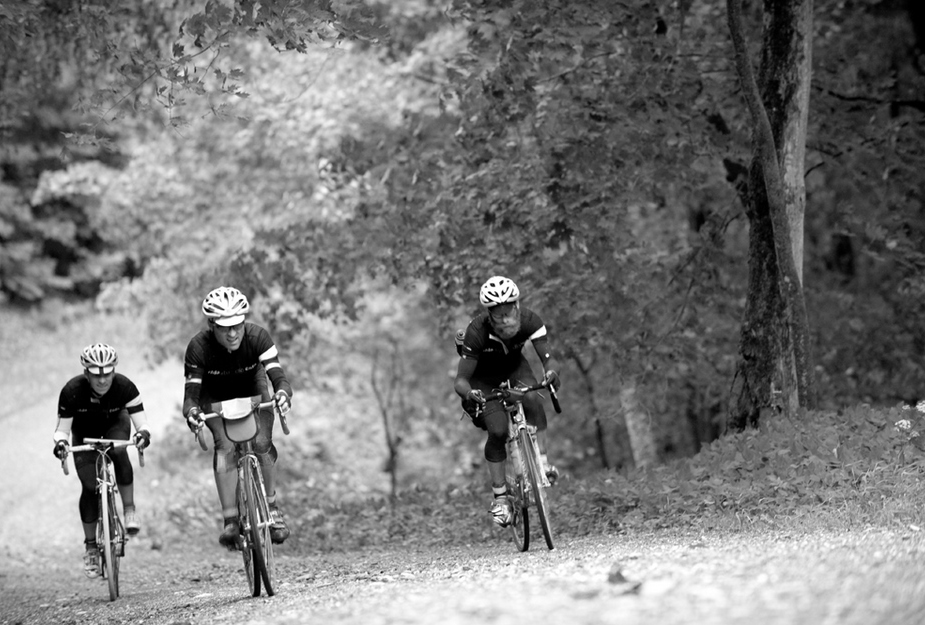
Three riders ascending
Perhaps the most grueling uphill section.
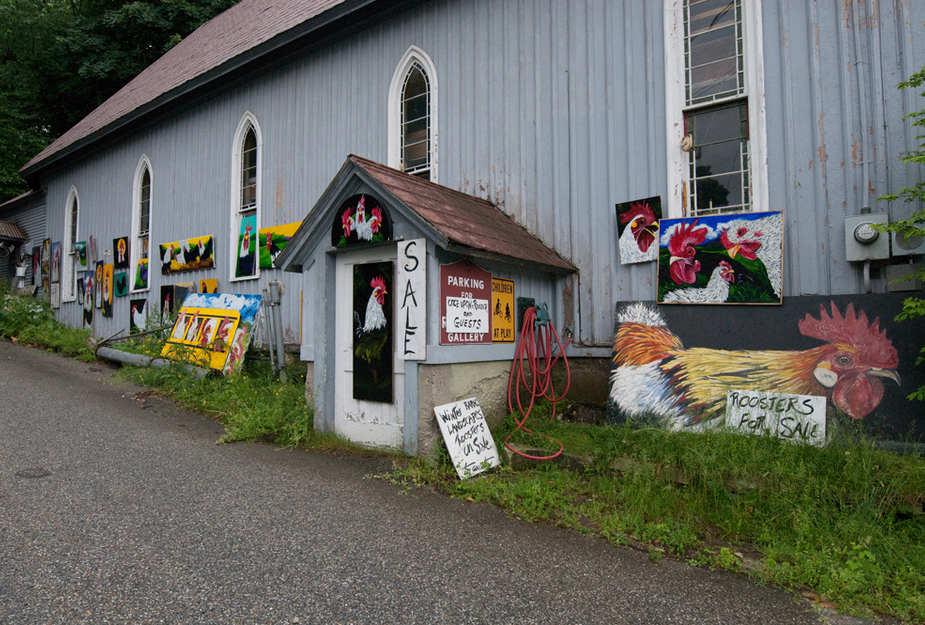
Paintings for Sale
This place had both kinds of paintings: winter landscapes and roosters. But mostly roosters.
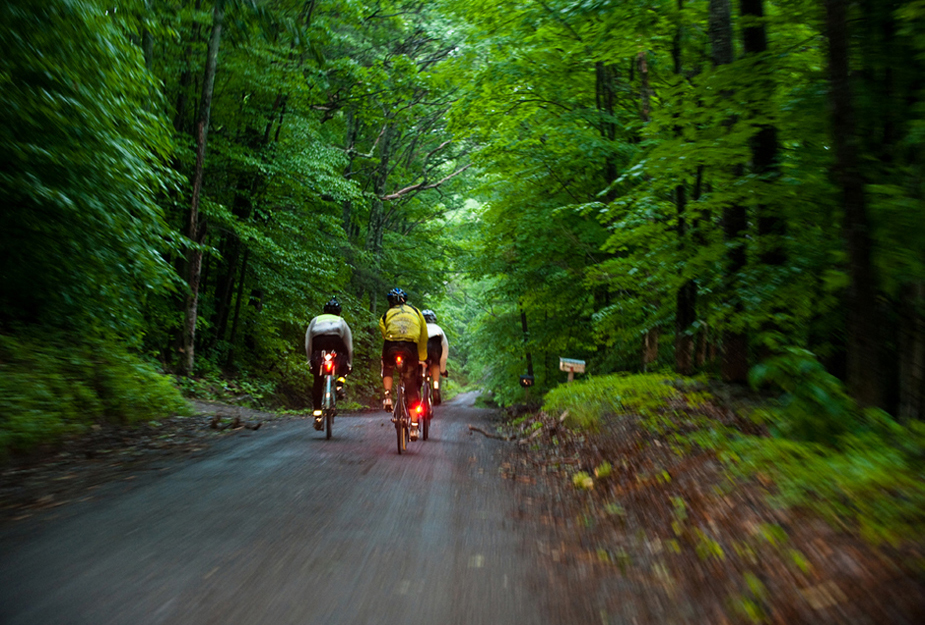
three riders fly downhill towards dusk
As the darkness ineluctably started to claim its throne, it all went downhill—literally, and for a while. Adroit and high-speed bunny hops over the occasional bumps, holes, rocks and logs were ahead, despite exhaustion and the poor visibility in the never-ending rain.
Near the End
They are nearly hypothermic, hungry, exhausted, almost no strength or spirit left for smiles. Here they have to make a call: cut it a bit short and just continue straight on paved road to the finish line, or stick to the route and quite possibly make a few wrong turns but finish as planned. Matt: “Argh, [p]uck it! What’s an extra 18 miles at this point? Let’s do it WHY NOT!?”

Boston Globe: Father and Daughter: Team Ultra

By Bella English

Father and Daughter Team Ultra

On Black Friday, while the rest of us are recovering from our Thanksgiving feasts, watching football, or hitting the sales, Kathy Laska and her dad, Dave Wilson, will be doing a 6.2-mile ocean swim, followed by a 90-mile bike ride up a volcano on the Big Island of Hawaii.

The following day, they’ll jump on their bikes and do a 171-mile ride with a vertical climb totaling 8,600 feet.

The third day is merely a double marathon: They’ll run 52.4 miles.

Each day’s event must be completed in 12 hours or less.

Are they crazy, or what?

“That’s not an unreasonable question,” replies Wilson, 65.

It’s called the Ultraman World Championships, and only 38 people in the world are competing in the invitation-only event this weekend. Twenty of them are from the United States, including two from Massachusetts: Wilson and Laska, 38. There has never been another father-daughter team competing in the Ultraman, and Wilson is the oldest in this year’s event.

Laska, of Millis, and Wilson, of Brockton, have each done one prior Ultraman, though not together: He took part 10 years ago and she, two years ago. So they know all too well what they’re getting into.

“There are all kinds of bizarre races all over the world,” says Wilson, a wiry 5-foot-6. “The Ultraman is one of them. Fringe races, I call them.”

As in lunatic fringe?

“It’s very difficult to pretend to have a normal life,” laughs Wilson, a mechanical engineer. “We like these endurance races and they take a lot of training.”

For one peak training day, Laska started at 7:15 a.m. and finished at 8:45 that night – a 10-hour bike ride and an hourlong run.

On a recent day, father and daughter are relaxing in her den, wearing their shirts from QT2 Systems, the training firm they’ve hired to help them prepare. Their triathlon bikes – a Specialized for him, a Seven for her – stand nearby. A shopping bag contains several large Ziplocks filled with power bars and gels.

“I’ll be only the third 65-year-old they’ve ever had and my goal is to beat the others’ times,” says Wilson, obviously excited about sharing the event with his only child.

Neither Laska’s husband, Brian, nor her mother, Janet, are into the races, except to support their team. Ultraman requires each competitor to have a team of at least two people. Crew members will follow the swimmers in a kayak and the bikers and runners in a car, providing food, energy drinks, mechanical help, and moral support.

Wilson has a friend and two Hawaiian volunteers on his crew; Laska has her husband, mom, and a friend.

Fear is a great motivator, and to Wilson and Laska, that first day with its endless ocean swim followed by a long, steep bike ride is the most daunting.

“I was incredibly anxious two years ago,” says Laska, who works in biotech sales. “I was afraid of taking too much time for the swim and not leaving enough time for the bike.” She completed the swim in a little over four hours.

Swimming conditions from Kailua Bay to Keauhou Bay vary greatly. “It’s going to take at least four hours,” says Wilson, “and if currents are bad, longer.”

He adds: “We’re not swimmers. We’re runners.”

Laska, in fact, did not learn how to swim or ride a bicycle until five years ago, at age 33. Growing up in Brockton with asthma, she skipped swimming class, and with poor eyesight, she didn’t bike.

“I gave up,” says her dad. “I couldn’t teach her how to balance.”

At Stonehill College, Laska earned a second-degree black belt in karate. After college, she started running to lose weight. At 30, she completed her first marathon.

“You could do an Ironman,” her father told her, and he set about to see that she did.

Five years ago, he told a training friend that he wanted his daughter to learn to swim. Jennifer Higgins met Wilson 15 years earlier, when they both swam at Walden Pond, and she agreed to be there for Laska’s first swim session.

“She showed up with one of those SpongeBob kickboards,” says Higgins, laughing at the recollection. “She couldn’t even put her face in the water.”

Laska also took pool lessons. “The only person who could teach me was someone who taught little kids; it was a joke,” she says. “This is all I can do.” She raises both arms in an overhead stroke.

Bicycling was a similar story. “Her father had to teach her how to bike, and she would be so skittish, he would crack up,” says Higgins, a running coach and yoga instructor. “I wobbled all over the place,” agrees Laska.

That was in the spring; by the end of that summer, she had completed a triathlon. With her father’s encouragement, she signed up for an Ironman triathlon. “I knew that if I signed up for it, I’d have to do it,” she says. She did, and was hooked. She’s done six.

Wilson was a late bloomer, too. He was 40 when he did his first triathlon, but he’s made up for lost time. In the past 25 years, he has completed 16 Ironman one-day events: 2.4-mile swim, 122-mile bike ride, and 26.2-mile run. He has done several half-Ironman triathlons and numerous marathons. He was 55 when he signed up for the Ultraman, in 2001.

Two years ago, Wilson had major back surgery; it was six months before he could train again. The following year, he did an Ironman.

“People ask me all the time if Dave will ever give up working out and doing races and I tell them not in this lifetime,” says his wife, Janet. “It can be very frustrating at times, but Dave and Kathy are both happy doing it and that is what counts.”

It’s not just about the training, either. For the upcoming Ultraman, Laska and Wilson have been working with professional coaches who have written a workout plan for each, along with a special diet.

“There’s a science to it,” says Wilson. “The key to endurance events is pacing and fueling.”

Tim Snow of QT2 Systems is one of their coaches. He’s known Wilson since 1998. “It’s great to see him going just as strong now as he was then,” says Snow, a professional triathlete. When Laska entered the triathlon world, she showed the same “mental fortitude and positive attitude” as her dad, he says.

“I have done many, many races, of all distances all over the world, but the thought of an Ultraman makes me cringe,” says Snow. Some of their individual workout days have included three-hour swims, nine-hour bike rides and three-hour runs, he says.

“I haven’t raked the leaves or cleaned the gutters,” Wilson says. “There’s only so much time in a day.”

In Hawaii, on each of the three race days, they will awaken at 3 a.m. to carbo-load for the 6:30 start time. Their coaches have written out an hour-by-hour diet for the event: before, during, and after. Even during the swim, they are to slurp down a power gel every 45 minutes and imbibe two sports drinks – compliments of their kayak crew.

Post-race, according to the plan, they can have: “WHATEVER YOU WANT!”

Though the anxiety is high for Day 1, Day 3 presents another big challenge: running a double marathon in Hawaii’s steamy heat.

“The second day, you’re riding high up, so it’s a little cooler,” says Laska. “The third day you’re running on black top, there are no trees and it feels like 100 degrees.”

Two years ago, it took her 9 hours to run the 52.4 miles. Ten years ago, it took him 11 hours.

Then there’s the cost of it all: the coaching, the entry fee, the air fare for them and their crews, the hotel, the food. “Oh geez, I don’t even want to think about it,” says Wilson. “If we can get out at $15,000 for the both of us, we’ll be lucky.” He is paying about 75 percent of the cost, his daughter the remainder.

When it’s over, there won’t be much rest for the weary. Wilson and Laska will begin training for their next events: Mooseman in New Hampshire, a half Ironman, in the spring; and Lake Placid, an Ironman, in the summer. Bella English can be reached at english@globe.com.