
skip to content
Current Lead Times: Rider-Ready Framesets: 4 weeks. Full Custom Bikes: 7 weeks.

Building Your Titanium and Carbon-Titanium Bikes in the USA for 29 Years

Dirt Rag Magazine: Stuff – Really Tested Product Reviews

by Philip Keyes

On the newsstands now, the latest Dirt Rag explores Seven’s unique customization process, creating a one-of-a-kind steel Sola single-speed, complete with disk brakes and bottle opener. They were impressed by the bike and the company behind it. Read more.

Seven Cycles Sola

Need proof that singlespeeding has spread beyond the punk rock, working class recesses of bike culture? Seven Cycles is now offering a steel singlespeed frame for a cool $1495. Yeah, it’s a lot of cabbage, but what you’ll get is a high-drool bike that’s fully customized, has a beautiful ride, and could be the sweetest frame you’ll ever throw a leg over.

What drew me to the bike was Seven’s use of an eccentric bottom bracket that rotates in the shell to tension the chain, so that the rear dropouts remain vertical (and disc-friendly). As a side benefit, the bottom bracket height can be raised or lowered since the BB can be rotated up or down to tension the chain, changing the rider’s center of gravity on the bike.

What really intrigued me about the Sola was the company’s philosophy of customization. For the price of a high-end production bike, all Seven bikes are designed and produced with a specific customer in mind. Nothing is off the rack. Even “singlespeed” is just one the many options for the Sola. Another option could be 29″ wheels… or how about a 29″ wheeled singlespeed? The choice is yours.

Creating a Seven

Sola Steel

Getting a Seven is more of a “creation” than a “purchase.” I began by filling out an 8-page questionnaire from their website that became the springboard from which the bike was designed. They wanted a full battery of body measurements, including some unique ones like your forearm length and shoulder width. I also had to describe and measure my current singlespeed, and comment on what I liked and disliked about it.

Everything’s custom: fit, geometry, and tube selection, accessories. I even chose the type of brake mounts, the cable routing, and number of water bottle mounts, paint color and decals. Then came the consultation with Seven.

These folks are hardcore bikers who realize that a rider’s relationship with his or her bike is unique and personal, and they talk in depth to their customers so they can determine what will work best for you. This is the essence of “mass customization,” but all for the same price.
The Sola uses the Origin tubeset, which uses a range of heat-treated and microalloyed tubes from Reynolds, Columbus, True Temper and Decacciai. Seven assembles the tubes in different configurations to achieve the chosen ride quality. Owner Rob Vandermark cut his design teeth with the S-bend stays, and the company creates them in-house using oversized non-tapered tubes for extra stiffness and lightweight.

Once I signed off on the design, I followed the production phases of my frame on Seven’s website by logging in with my personal password. The sense of anticipation was intense, and a few weeks later the bike was ready.

The Ride
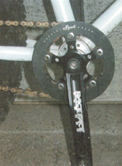
Sola Steel Crank

When I first saw the bike, what caught my attention wasn’t the beautiful pearlescent white paint and black decals, the graceful lines, impeccable welds, gorgeous seat stays, or even the killer Vicious Cycles rigid fork-”it was the bottle opener built into the junction of the seat tube and top tube. Whooo hoooo!

Once on the bike, I was impressed that all my desires and measurements had been used to create a bike that rode even better than I could imagine. The combination of perfect fit, dialed in geometry and custom tubing produces a ride quality that is hard to beat. The super-stiff drivetrain was perfect for out of the saddle honking, but it was still nice and supple in the rear end- a little comfort for my arse, since I was riding fully rigid.
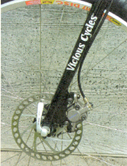
Sola Steel Fork

The only design feature I didn’t like was the use of circular cable guides for the hydraulic lines, since they require brake disassembly to install. Seven assures me that they will have gone to an open design by the time you read this.

I’ve probably put in well over a thousand miles on the bike, and I’ve found that its steering is razor sharp but not twitchy. It climbs everything that I’ve got the legs for, and it’s a rocket descender as long as I’m careful about the line. Whether it was a two-hour hammer fest or a 5-hour epic, the Seven performed flawlessly.

The Parts

Sola Frame: $1,495
As Tested: $3,200
Contact: Seven Cycles
125 Walnut Street, Watertown, MA 02472
617.923.7774
www.sevencycles.com
Drivetrain: Shimano XT
Sizes: Completely custom sizing/geometry available
Weight: 24lbs., 10.5oz.
Contact: 617-923-7774 www.seevncycles.com

I couldn’t go wrong with Vicious Cycles’ rigid disc fork. This slender steel fork with disc mounts is way cool and beautiful (in an evil looking sort of way). With its precise steering and zero travel, the fork is excellent for out-of-the-saddle hammering. The only drawback is that, like the test bike, the fork’s cable guides are eyelets that require brake disassembly to install.

The wheels are Mavic 317 disc rims woven to Spot Bike’s disc singlespeed hubs that are light and have buttery smooth cartridge bearings. Spot also produces the CNC’d black chainguard and 32-tooth chainwheel that mates nicely with the black Race Face Turbine LP cranks. The cranks are super stiff, and my only quibble is that they use old style bolts rather than the hex nuts, making on-trail tightening a hassle.

Easton’s Monkey Lite carbon handlebars help damp vibrations, which is important when running a zero travel fork. I’ve got no complaints about either the Thomson Elite stem or post, though I wasn’t keen on WTB Motoraptors since they tend to slide out fast in the comers.

The Hayes hydraulic disc brakes are secure stoppers, but they don’t have much modulation. After a series of bouts with rear brake chatter, Seven scored some oversized flange washers from Spot for the rear hub to stabilize the disc rotor.

Last Word

The Seven Sola SS is a dream bike, and while the price may keep it that way for some folk, you need to ask yourself: how important is riding to you? As Seven’s Jennifer Miller puts it: “A Seven is for someone who thinks life’s too short to compromise on the things that really matter.” Seven owners get a few perks as well: a quarterly newsletter, an owners’ website and an annual weekend gathering of the whole Seven tribe to make sure your relationship with your bike and the company lasts a lifetime.
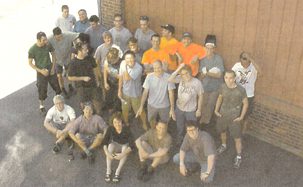
Seven Crew

Seven Cycles:
Following a dream

Seven Cycles was started in 1997 by the soft-spoken design guru, Rob Vandermark, and four other of his ex-Merlin compatriots. Together they shared a vision of being able to mass-produce fully customized bikes.

It may seem like a contradiction in terms, but “mass customization” is integral to Seven’s business plan. There is no batch production of stock sizes. Each frame is built separately one tube at a time, only when an order has been placed and the frame has a specific owner. A lot of thought went into Seven’s production methodology. For example, one employee’s full time job is “process improvement,” and he spends all his time working on the production schedule, improving the factory layout and fine tuning the tooling to streamline production. Another employee is solely responsible for calibrating all the machines needed to cut the myriad tubes. His goal: maximum efficiency and zero defects.

According to Seven’s Jennifer Miller, “the production process will never be a limiting factor in the number of custom bikes we build. Right now we build more custom bikes than any other manufacturer.”

Key to their success is the teamwork of all 33 Seven employees. “We have an open-book management style,” says Miller, “which allows employees to see how their actions and decisions affect the bottom line, and at the end of the quarter when we discuss profit, and the employees get a big check [from profit-sharing] they realize that everyone’s actions really do matter, and they take a real pride.”

While Seven is pushing into uncharted waters-”even initiating employee stock ownership-”the company was profitable after their first year, and they’ve been so consecutively for the last 46 months. Though they won’t discuss specific production numbers, they’ve had a 30% increase in sales since last year. And while their market is about 70% road frames, their recent licensing agreement of Paul Turner’s Maverick Monolink suspension design for Seven’s new Duo should create quite a stir.

“None of us are rich,” says Rob Vandermark, “but I enjoy the challenge of bringing custom bikes to people who otherwise might not afford them, as well as making a better bicycle.”
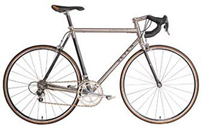
Mountain Bike Magazine: Tips for Ti: Going Custom

from 101 Tips That Don’t Suck

When the editors of Mountain Bike magazine wanted to include tips on choosing a custom bike in their 101 Tips issue, who did they turn to? Seven Cycles, of course.

Going Custom

Seven Cycles is known for elegant, ultra-perfectionist frames. You can have one for the price of a small heart transplant. (Actually, the company’s steel bikes are fairly reasonable.) If you can afford it, you’ll never have a bike that fits or rides better. These tips—from Seven’s Rob Vandermark—apply to any custom bike.

Who Needs One?

Prevailing sentiment says the average person doesn’t need a custom bike (actually, even more prevailing is that the average person can’t afford one). But who’s average? Any rider can benefit from a custom bike. Custom geometry, tubing, features and options provide better handling, greater comfort, optimized ride characteristics and a lasting reflection of your individuality.

The Real Deal

Some manufacturers’ idea of custom is limited to paint color or component options. But for true customization, look for a builder that offers these four elements:

  • Custom geometry as it relates to size, fit, ergonomic comfort and biomechanical efficiency.
  • Custom geometry as it relates to handling, response and performance.
  • Custom tubing and material choice for optimized weight-to-performance, feel and ride characteristics.
  • Custom options and features, such as head-tube extensions, top-tube slope, cable routing and component compatibility.

More for Your Money

Any high-end bike is a big investment. A true custom bike adds more value by providing you with exactly what you want. To get the most for your money, look for a builder that doesn’t have a custom up-charge.

Where Your Local Shop Comes In

Getting a custom bike shouldn’t be intimidating or mysterious. In addition to choosing a builder that has custom-fit and frame-building expertise, you should purchase the bike through a shop that has extensive custom-fitting and selling experience. The bike builder should work closely with you and your shop to ensure you get the perfect bike.

The Key to Custom

Choice of tubeset is all-important. The reason some people find their bikes too harsh or too whippy has more to do with the size (wall thickness, diameter) of their frame’s tubing than the frame material itself. That’s why a rider-specific tubeset is key to making your frame as lively, plush, stiff and/or light as you need. No custom bike is complete without it.

Mountain Bike Magazine: Dave Gilheany

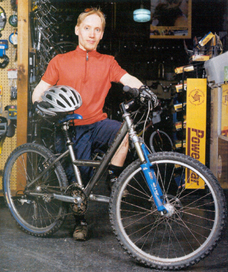
Dave Gilheany and his Seven

Age: 27

Home Town: Frenchtown, New Jersey

Occupation: I cook at the Main Street Cafe, this little 30-seat restaurant that serves eclectic food—a lot of French, a lot of sauces. I’d say it’s towards the high end. I also work at the bike shop right next door. I’m a mechanic, salesperson, pretty much anything.

The Bikes: I have a mountain bike with 24-inch wheels and a road bike with 650c wheels, both custom titanium Sevens. They’re currently working on a titanium modified trials bike for me.

The Situation: I have cartilage-hair hypoplasia, which means I don’t have as much cartilage or ligament tissue as an average person. Also, my bone structure isn’t as strong. It’s not too major. I couldn’t play contact sports in high school and I probably shouldn’t ride trials, but that’s about it. The disease also affects growth, so I’m 4-foot-8 and weigh 103 pounds. As a result, the bikes I tried were all too heavy and too big. Anything that was close to my size was a kid’s bike—they’re usually less expensive and aren’t high quality. I tried a 12-inch frame with 26-inch wheels, but I didn’t have any standover. I tried a bike with 24-inch wheels, but it was a tank, and had no suspension. There’s not much out there in my size that’s high quality, so I went to Seven.

The Right Bike: I’m now able to take it as far as I want to. Now the bike isn’t holding me back, it’s all up to me. The bike allows me to try stuff I would not have tried before.

The New Life: Before, I wasn’t a hard-core cyclist. I just used a bike to get around. When I got the right bike, I became obsessed with riding—any kind of riding, as often as possible. It’s also affected my jobs. Before I was working just to pay bills. Now I work so I can spend more time riding. I feel more physically fit now, more at ease—it’s brought my stress level down.

Bicycling Magazine: Seven Sola – Titanium Runs Through It

by Richard J. Cunningham, courtesy of Mountain Bike Action

Seven Cycles’ founder Rob Vandermark was already fooling with bicycle frames when Merlin Metalworks, the seminal seed of the titanium mountain bike industry,was conceived. He learned to craft the silvery metal there, and also discovered the beauty that can be expressed by bare tubing wrought by craftsmen into a functional frame. Vandermark ultimately splintered off on his own, taking a handful of Merlin’s titanium junkies with him.

Armed with a utopian dream of producing perfect one-off custom frames in a classless workplace, Vandermark put together a business plan and scared up enough funding to make a go of it. “Seven” became a reality in 1996—a 1000 square-foot shop in Somerville, Massachusetts. Seven has now expanded—seven times larger—to a new site in nearby Watertown. The crew still builds one frame at a time to an individual customer’s geometry, or to Seven’s specifications. Although titanium is the material of choice there, Seven also produces frames with a blend of butted steel tubing and a unique chassis with a carbon fiber seat tube and chainstays, bonded to a titanium or steel main frame.

Meet The Sola

Seven’s Sola is its elite titanium frame. Like all Seven’s chassis, you can it order any geometry you please, or pick from a menu of options, and your Sola will still cost a cool $2595. Ours was built with Seven’s stock numbers, and was equipped with an A-type universal disc brake mount. Tube-guides are welded to route the disc brake hose to the rear dropout and, of course, there are no vee-brake bosses. The main frame pipes are Seven’s “Argen” butted tubes. Unlike most butted tubing, the thicker portion is on the outside, making the outer diameter greater at the ends of the tubes. This reportedly increases the stiffness and strength of the chassis. Except for the 6-4 alloy dropouts and some fittings, the Sola frame is entirely 3-2.5 alloy titanium.

Seven’s literature waxes eloquent about their attention to detail, and this frame does not disappoint. The lustrous, brushed-Ti finish is accented by beautiful welding throughout, and its curvy, S-bend rear stays are as sexy as an inanimate object can be. The head tube is eccentrically machined to add thickness where the frame tubes join—to shed a few grams, and to showcase its cast alloy head badge. The Sola’s graphics are pleasantly understated to let the elegant chassis speak for itself.

The only less-than-elegant aspect of the Sola is its dog-ugly seat clamp arrangement. Perched atop this sleek, burnished titanium masterpiece is a dull, bead-blasted external clamp with exposed threads that appears to have been stolen from a Russian submarine. Ah well; nothing, as they say, is truly perfect.

Outfitting The Perfect Hardtail

When you purchase your custom frame, the choice of components is as personal as your bike’s geometry. Our Seven was appointed with Hayes hydraulic disc brakes, a RockShox SID Race fork, and a Selle San Marco Strada saddle. The wheels were Mavic CrossMax Tubeless hoops that rolled on Hutchinson python tires. All the rest was Shimano XTR, with the signature gray color that blends perfectly with brushed titanium. There was nothing to complain about on this list.

Riding the Sola

Anyone who competed during the golden age of NORBA cross-country racing will appreciate the feel of the Sola. Its long, low stem and traditional frame geometry are a tribute to a period when climbing and pedaling efficiency were our only concerns. Heave-ho on its titanium handlebars, stomp on the pedals and it will accelerate straight and steady. Jump out of the saddle, sprint and it will follow your every move. Within the speed range and breadth of difficulty imaginable on a cross-country circuit, the Seven seems infallible.

The Sola feels light, but not feathery like modern aluminum lightweights. Perhaps this is because the titanium chassis carries more weight in its upper tubes. At 23.2 pounds the disc-brake-equipped Seven is very light. A strong cyclist can ride most rollers in the big chainring—and level the lion’s share of single-tracks in the middle ring. Perhaps it’s scientifically true that riding a bike that weighs a couple of ounces less won’t make you a significantly better rider, but the emotional high of spinning around the hills on a sub-24-pound mountain bike seems to counter that argument.

The titanium frame has a tiny lag to it that precedes each power pulse—about half as much as a good steel frame—which is a good trait. This “spring” effect is the quality that steel hardtail lovers revere—it’s the essence that makes a frame feel alive. Too much flexibility in a frame, however, and it will handle and accelerate like a wet noodle. Many early titanium mountain bikes lacked enough rigidity to please aggressive riders. The Seven’s frame exhibits no bad habits in the flex department. Its blend of butted pipes and beefy rear stays can take anything you dish out. The Sola’s steering department could be more stiff. Its handlebar and stem arrangement seems to wind up when you are climbing hard and really honking on the bars.

Overall, we find it hard to fault the Seven Sola. There are some who would want to tame the Sola’s fast steering and try to make it more of a freeriding machine. Others might want to extend its fork travel, or choose more flexible frame tubes to enhance its rough-trail worthiness. We like the Sola’s purity of purpose. It has been carefully honed into the essence of the racing hard tail—why would you spend this much money to experience anything less? Every aspect of the Sola is meant for is the race track: its tubeless tires rolled like they were hovering over the trail surface; its Shimano XTR ensemble was designed on the World Cup XC circuit; its SID Race fork owns more titles than any other slider—and the Sola, in disguise of course, has been ridden to the podium by many luminaries. Don’t mess with success.

MBA’S Last Word

You have to be a committed hardtail junkie to dish out 2600 bucks for a frame. The total cost of our test bike easily passes the $5000 mark—that’s enough to race the entire national circuit on a budget. The proof lies in the ride though, and the Seven is one of the sweetest hardtails we’ve tested. The other motivating factor is the long lifespan of a titanium frame. If you really are the kind of rider who knows exactly what you want—then why fuss with a long sequence of hardtail purchases when you can buy one that will last a lifetime? It’s all about choices at Seven.

Teacher’s notes: If you are an experienced hardtail enthusiast, think long and hard about your frame geometry, riding style, and personal fitness—then call Seven and order the last bike you’ll ever purchase. The Sola is the end of the line in the evolution of the conventional hardtail mountain bike.

Ordering Your Sola: What You Get For $2595

We asked Jennifer Miller, the Market Development guru at Seven, to answer some questions about ordering a frame. Remember, when you order yours, you should be prepared to wait a spell. Although Seven is a top producer, the best frame builders’ turn-around times are about one month. Glitches always crop up, so pad your expectations.

MBA: Do you have to specify all of the geometry when you order a frame?

Jennifer: Since we build every frame to order, the handling is dictated by the needs and desires of the rider. However, if a customer was simply to choose a Sola Ti in one of our Signature Sizes, instead of getting a custom, they would be getting geometry that leans toward race handling. I should add that one can choose a Sola Ti in one of our Signature Sizes with a more relaxed geometry as an option. Also, even if a customer chooses one of our Signature Sizes, he/she can still opt for a custom tube set, which would allow them to get just the right balance of frame stiffness and compliance.

MBA: What if a customer asks for a really stupid bunch of numbers?

Jennifer: In the case where a dealer or end customer requests geometry that we think will compromise the performance of the bike, we would provide a recommended geometry and explain the reasons for our recommendation. There have been one or two rare occasions where someone has asked for something so wacky that we have declined to build the bike. We have some dealers, however, who often order frames on what we call our “Specs as Requested” form, and they take full responsibility for the frame’s geometry. These shops are generally very experienced and highly competent in this area, so usually we won’t make a recommendation to the contrary.

MSA: Rob Vandermark’s signature appears on the Seven’s frame. Does he personally oversee the geometry of every frame, or does Rob set down general guidelines that your individual builders adhere to?

Jennifer: We have four custom specialists at Seven who will generate preliminary specs based on a very comprehensive set of criteria Rob has created, but these specs are all subject to Rob’s approval. Rob has the final say.

MSA: Is it true that every frame Seven produces is custom built?

Jennifer: What Seven brings to the table really stems from our unique manufacturing methodology. We build every frame to order, so basically, we sell a frame and then we build it. We have no finished goods inventory and we are completely flexible to create just about anything our customers can dream up in terms of how they want their frames to handle, feel and even look to a certain extent. Also, each craftsperson here works on only one frame at a time. We never work in batches. This individual attention enables us to have great attention to detail and quality craftsmanship.

MBA: Who is your target customer?

Jennifer: Our target mountain bike customer is really no different from our target customer in general which is anyone who seeks to enhance their riding experience through the optimum fit, handling, performance, and ride characteristics of their bike. One benefit of a Seven that I haven’t said too much about is our ability to completely tailor the frame’s tube set according to the rider’s weight, riding style, and preferences. This has been an extremely attractive feature for bigger, more powerful riders who never thought they could get the stiffness and responsiveness from Ti that they needed, and for smaller riders who have felt beaten up by their frames. Through the precise selection of tube wall, diameter, and butting length and placement, we can address all of a rider’s considerations for weight, durability, and ride characteristics.

Jennifer Miller’s Thoughts on Being an East-Coast Frame Builder

“Geographically, of course, we are an East Coast builder, but I think any other meaning to that has more to do with our heritage and experience than to any particular design elements that you can call East-Coast anymore. As you know, most of us spent the better part of our adult lives at Merlin prior to Seven, and some, including Rob, go back as far as the early days of Fat City. Also, the East Coast, particularly the Boston area where Seven is, has an extraordinary number of colleges and universities. This makes for a very diverse, educated, and creative labor pool, which we have been very fortunate to draw upon. Plus, I think there is a very good work ethic out here.”