skip to content
Current Lead Times: Rider-Ready Framesets: 3 weeks. Full Custom Bikes: 7 weeks.

Building Your Titanium and Carbon-Titanium Bikes in the USA for 29 Years

On the Road – Bob Kruger Grinds Oregon Gravel

When you finish a bike, put it in a box, put that box on a truck and send it out into the world, you never know what kind of adventures it’s going to find. We built Bob Kruger a Mudhoney S last year with our good friends at Cascade Bicycle Studio in Seattle, and, like so many of the cyclists we admire, he put it to good use as a cyclocross race bike, a bad weather commuter and finally, as a mixed-terrain explorer.

Bob’s gorgeous photos and prose from the Gorge Roubaix Gravel Grinder below:
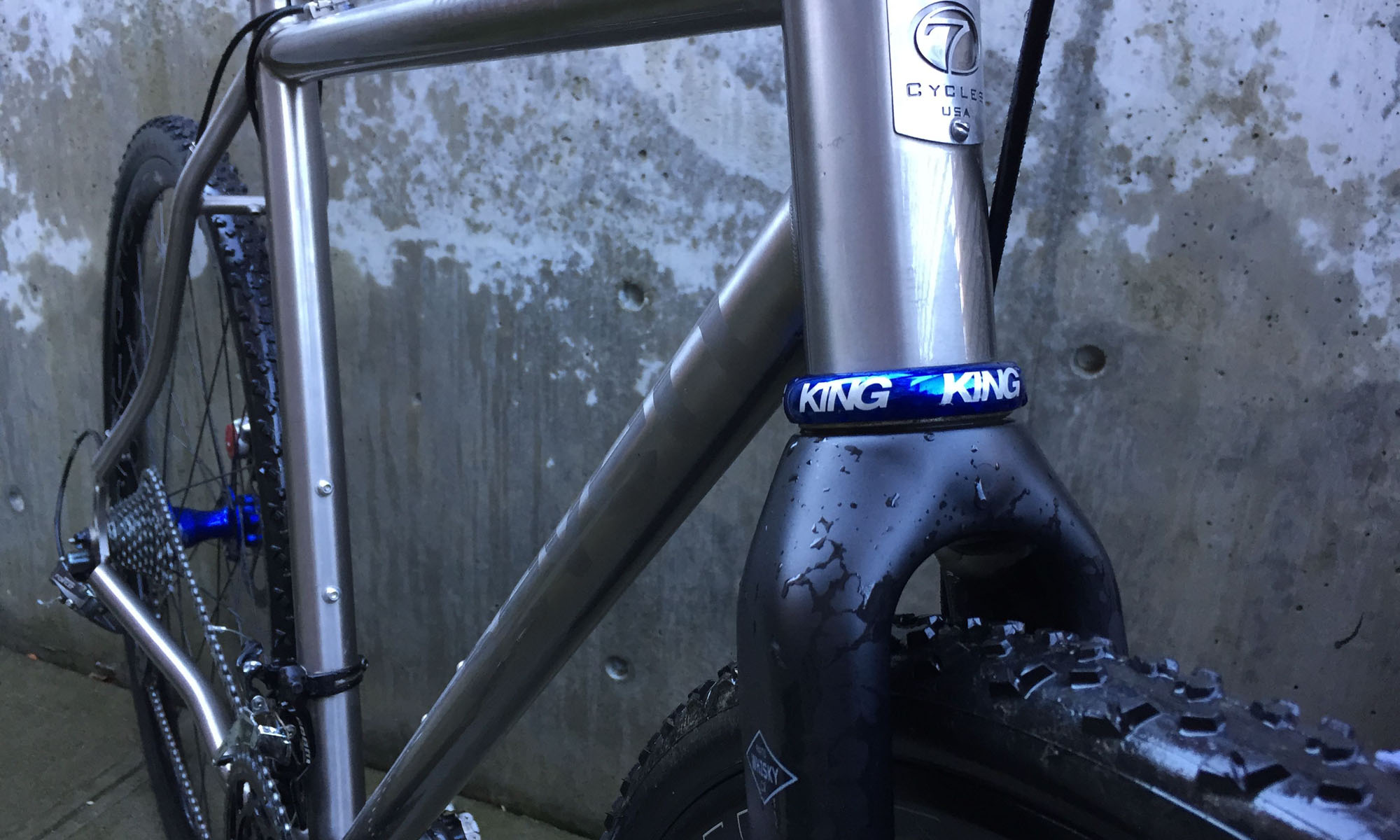
Seven head tube detail

Last spring I was looking for a new bike. I had a number of intended uses for this bike: commuter, cross racer, gran fondo and all around performer. I wasn’t looking for a plastic race bike, nor a heavy city bike. This bicycle needed to look great, take a beating and come out the other end looking just as good. It needed to perform well 365 days a year for the next 30 years. That’s a big ask.

I found the perfect bike. It was a Seven Mudhoney S. Although I thought it was perfect throughout last autumn’s cross season and a winter of commuting, I verified it this weekend at the Gorge Roubaix Gravel Grinder.
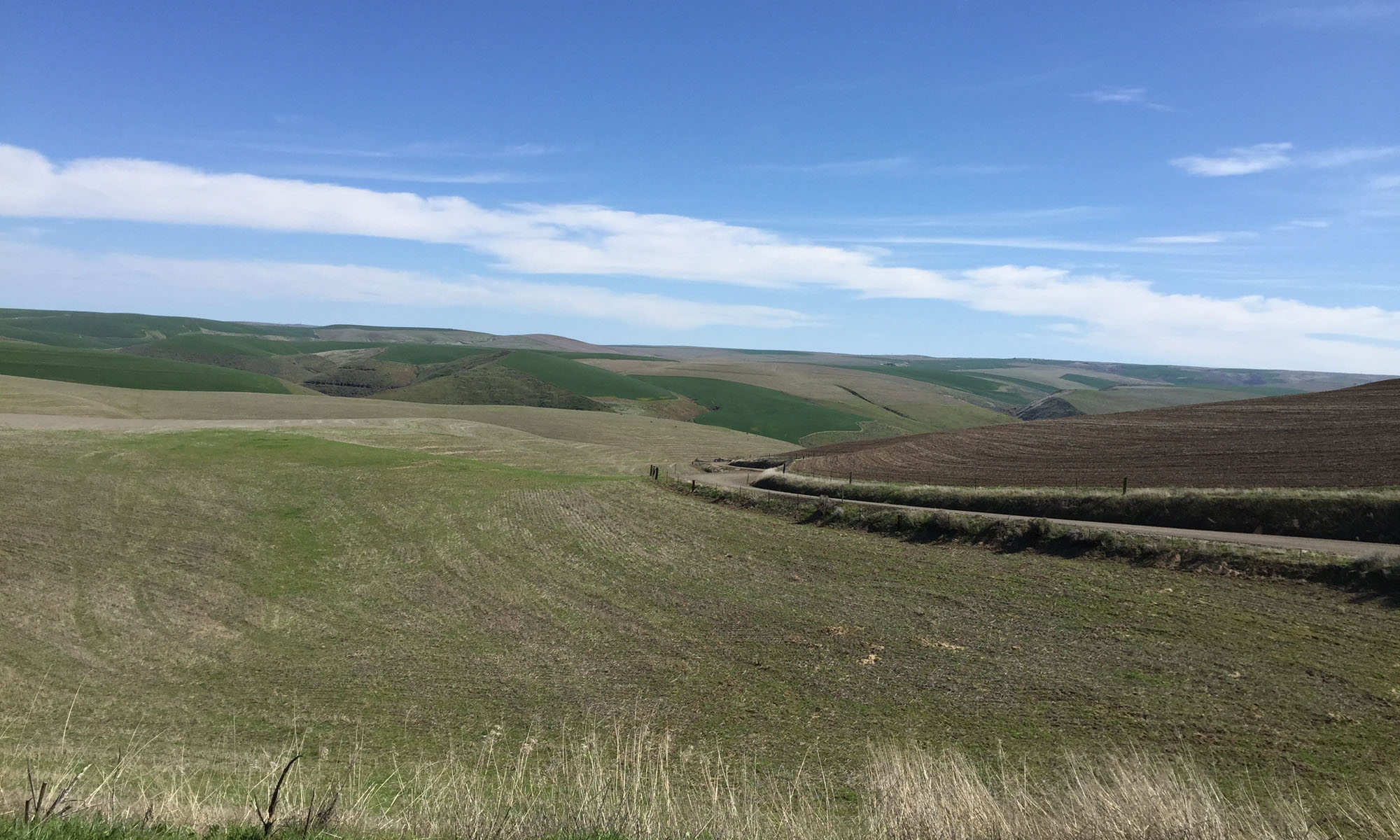
rolling fields

Throughout the day I was continually reminded of how much I loved my Seven Mudhoney. The 28 mm Continental 4-Seasons performed spectacularly both on the treacherous gravel descents and fast paved sections. The CBS-built Hed Belgium + Chris King hubbed wheelset was bomber and rolled smoothly and perfectly throughout a day where many, many large rocks were hit. The Mudhoney S: titanium frame was solid with zero chatter or skittishness. The gravel and rocks we encountered didn’t even faze the polished titanium’s shine. The Avid BB7 disc brakes gave me a massive amount of confidence and between that and the solidity of the bike I had no fear descending rough gravel at 35 mph for extended periods of time. While others complained of numb hands and feet, I experienced none of that. I couldn’t have been happier with how my Mudhoney performed over those 85 miles.
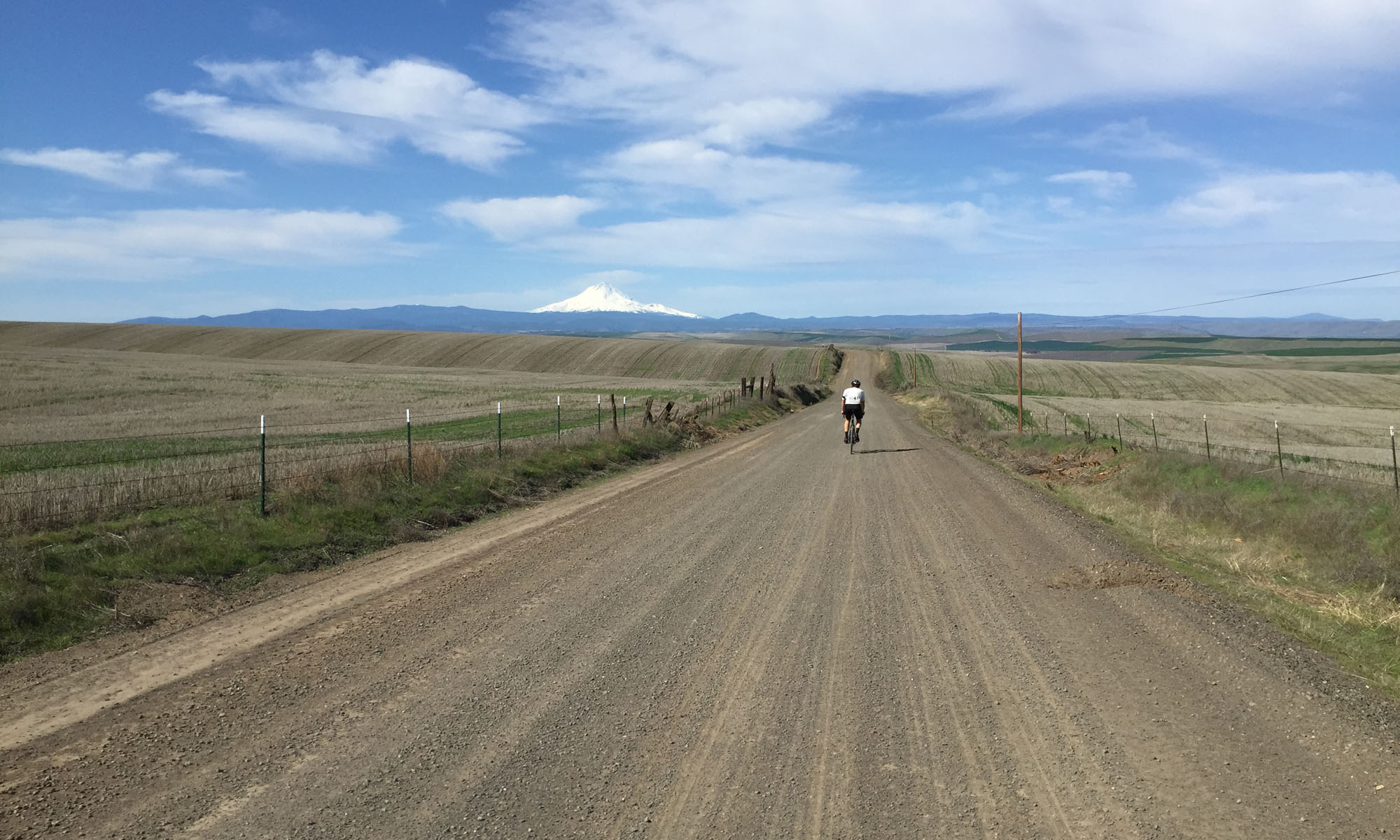
A long dirt road

That night I rinsed the dust off, lubed the chain, screwed on the fat PDX fenders and was ready for the rainy Seattle commute the next morning. In the fall I’ll pull my Contis, install my fat tubeless CX tires and try to win some old man Cat 3 races on this Mudhoney. I’m serious about riding this bike for the next 30 years. I’m sure it will look better than I do in 2045!

Bob Kruger is an Environmental Scientist who grew up in Skagit Valley, Washington and currently resides in Seattle. All of his energy is focused into family, friends, work, travel and being active outdoors, in that order and often together. His outdoor passions include cycling, skiing, golf and being on the water.
The Big Ideas – The Rider/Retailer/Builder Partnership

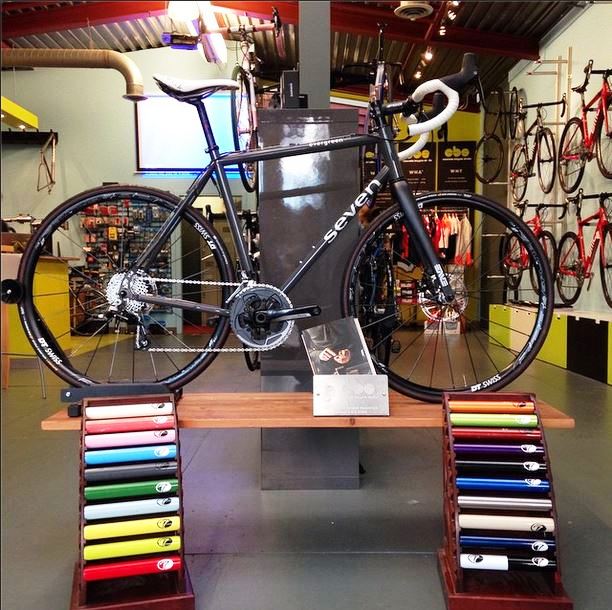
Seven trade show booth

The Big Ideas, as a series, is about this whole bike building project we embarked on in 1997 and the foundational ideas that make what we do possible. The first installment was about Single-Piece Flow (SPF). The second installment was about Just-in-Time manufacturing (JIT). Last we explored the 5 Elements of Customization.

We started with an idea, a different kind of bike company, one that offers a product and a service, an experience, and we found a build method that would support it, Single-Piece Flow. Then we backed it up with a manufacturing model that would streamline the process and hold down costs, Just-in-Time manufacturing. Then we created a language that would free rider’s from the constraints of production models, that would allow them to speak the language of custom, the 5 Elements.

Finally, we needed a way to connect all the dots.

Everything we’ve done so far, philosophically, has been about gaining focus on the individual rider, so how do we understand the roads they ride? How do we see and measure them effectively? We always want to be a local builder. The machine shop we get most of our small parts from is local. The builders who work here all live nearby. If we can’t be near all our riders, how do we get closer? How do we localize ourselves?

We needed partners in every cycling community, and the obvious way to get that was to work with bike shops who wanted to collaborate with us and our riders on custom builds. Seven riders are de facto bike designers. We are only building them the bike they tell us they want, and our bike shop partners facilitate the process.

We are the only builder who does direct, systematized interviews with each customer while also working with the shop. Together, the three of us create the custom experience, and THAT is how we get from the idea of fully custom bicycles on a short timeline to delivering fully custom bicycles on a short timeline.

These are our big ideas. They’re simple when you break them down, even though we are still refining them, even after 30,000 bikes have passed through our hands.

Robert’s Sola SL 007

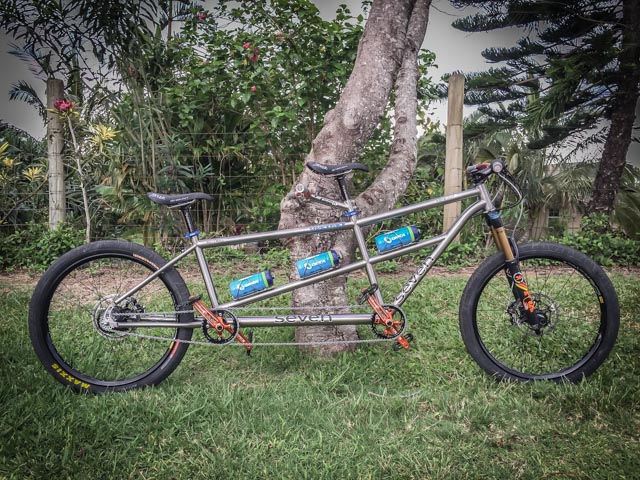
This is Robert’s new Sola SL 007, a mountain tandem perfect for the Hawaiian back roads and trails Robert wants to explore. The final build looks great.

Sola SL 007

He says:

I finally got all the parts for my tandem and put it together on the weekend. Took it for it’s maiden voyage today on a short ride here in Maui. It is perfect. Thank you again.

Now I can plan my next project…

Speak soon

Robert

The Big Ideas – The 5 Elements of Customization

The Big Ideas, as a series, is about this whole bike building project we embarked on in 1997 and the foundational ideas that make what we do possible. The first installment was about Single-Piece Flow (SPF). The second installment was about Just-in-Time manufacturing (JIT).

This week we explore the 5 Elements of Customization.

It is all well and good to tell someone you can build their ultimate bike, but if they don’t have the vocabulary to tell you what that bike should look like, you’re no closer to that bike existing than you were before you met them. The 5 Elements give riders a useful way to think about customization.

The 5 Elements are the language of Single-Piece Flow on the bike shop floor.

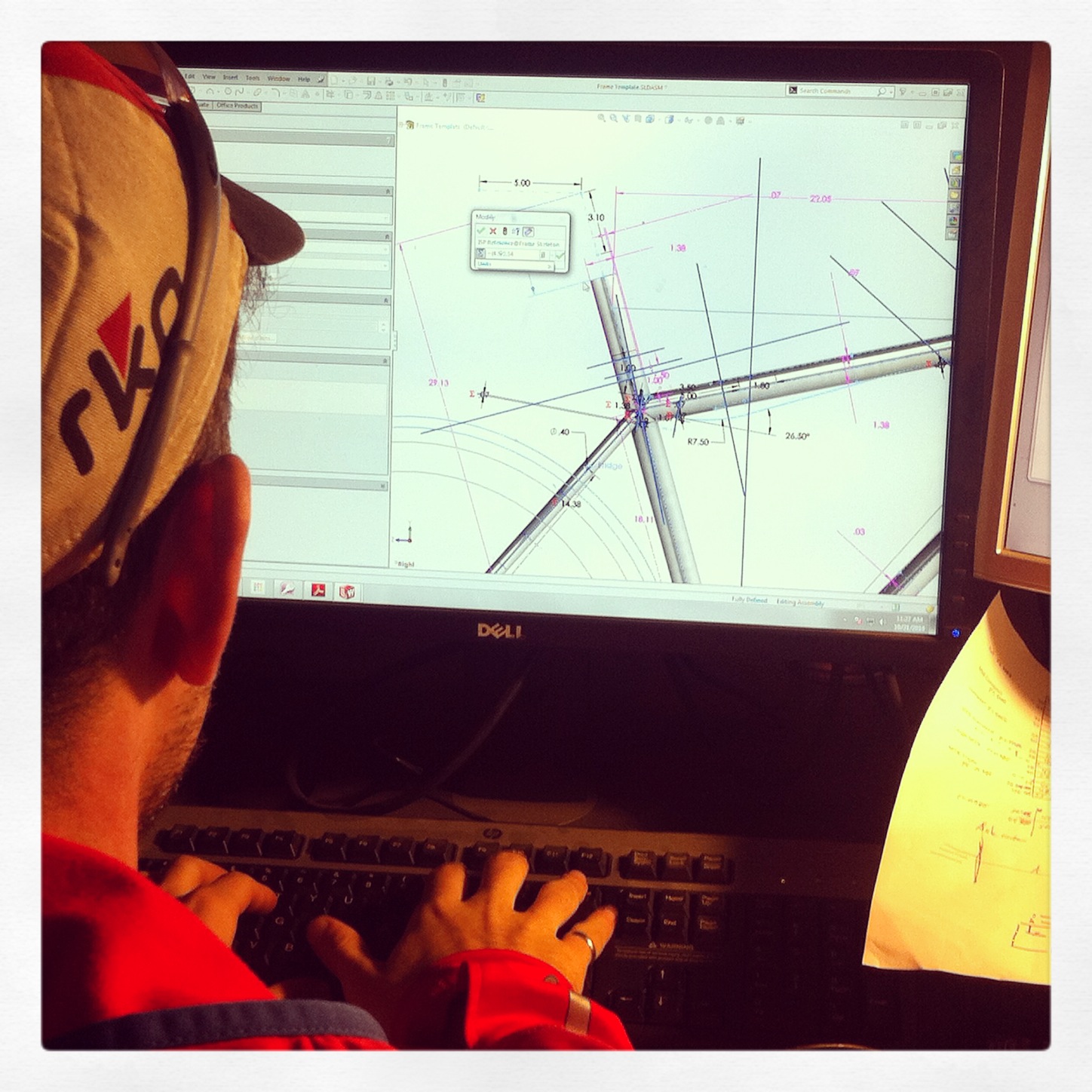
Ryan working in SolidWorks

1) Fit & Geometry – Think of the upper half of the bike, the points where you touch the bike, saddle height, set back, reach, bar height. These are the angles and centimeters that address different riders’ size, proportions, age, style and health (injuries). We address these, at the shop, through a bike fitting, and then follow up with body measurements that allow us to consider that fit in terms of your new frame’s geometry.

2) Handling and Performance – Think of the lower half of the bike. This is where we fine tune for rider weight, comfort, handling and riding conditions. Bottom bracket drop, fork rake, chainstay length, all these things affect how the bike feels. If you tell us you want your bike to be stable or quick handling, we can produce those characteristics through fine tuning of handling and performance features.

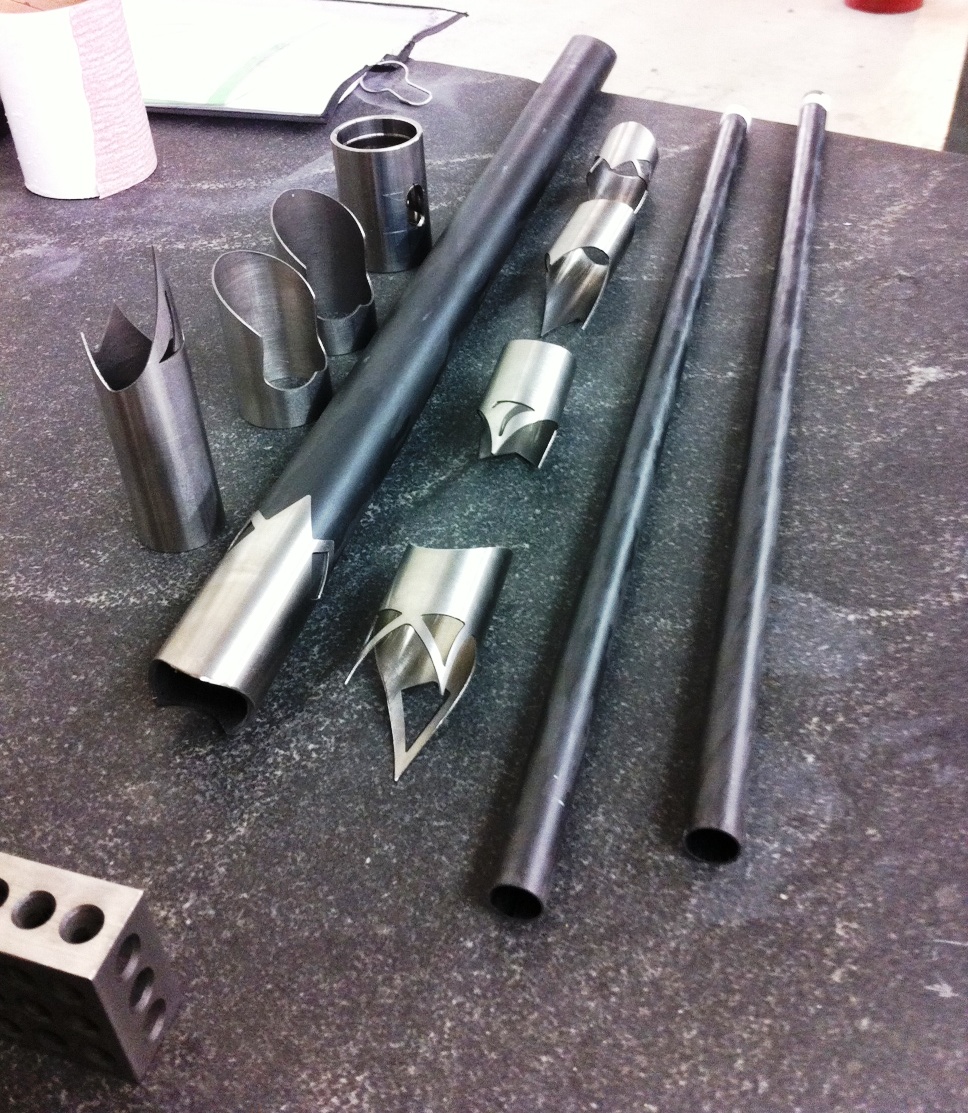
titanium lugs and carbon tubes

3) Tubing & Materials – We work in steel, titanium, and Ti/carbon mix. We start from the beginning when designing a bike for you, choosing a material that speaks to the kind of riding you do, then we go further, picking a tube set, in that material(s), that matches your specific preferences for stiffness and/or comfort, then we go further still, refining your rider-specific tube set through tube butting processes to accomplish the most personalized on-bike experience available from any custom builder, anywhere.

4) Options – Brake types, rack and fender mounts, decal colors and placement, paint, cable-routing, couplers, chain or belt drive component optimization, the configurations and permutations are close to infinite. This is how you dial the bike in. This is how you meet ALL your goals for your new bike, without compromise.

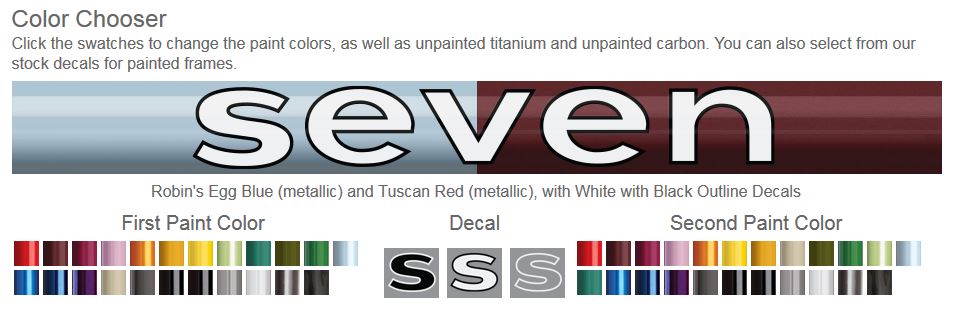
paint and decal choices

5)The Future – This is how we make our design as durable as our materials. We plan for the rider’s aspirations. Racing? Touring? Commuting? How does the bike age with the rider’s body? Is it adaptable? How do we keep the bike useful for the rest of the rider’s life?

You don’t have to be a bike designer to collaborate with us on the design of your new bike. You just need to be able to express your preferences in simple terms and let us map them onto the 5 Elements of Customization.

The Cycling Media Reacts to Mo Bruno Roy’s Retirement

It’s been a happy/sad week for Mo Bruno Roy, since she announced her retirement from Elite Cyclocross racing. New beginnings are like that. It’s a testament to all the things we said about her just a few days ago, that the cycling press has covered her retirement in a way they don’t usually mention other riders moving on.

There were kind words on VeloNews, a nice interview on Bicycling, and a photo series on The Radavist, showcasing Mo’s Mudhoney PRO race bike, all-in-all the nicest way to sign off from elite racing that we can imagine.

Stay-tuned for our own interview with Mo, and don’t think you’ll stop seeing her on her Seven or in these digital pages. She’s not racing elites next season, but, in literal terms, she can’t stop/won’t stop.