skip to content
Current Lead Times: Rider-Ready Framesets: 3 weeks. Full Custom Bikes: 7 weeks.

Building Your Titanium and Carbon-Titanium Bikes in the USA for 29 Years

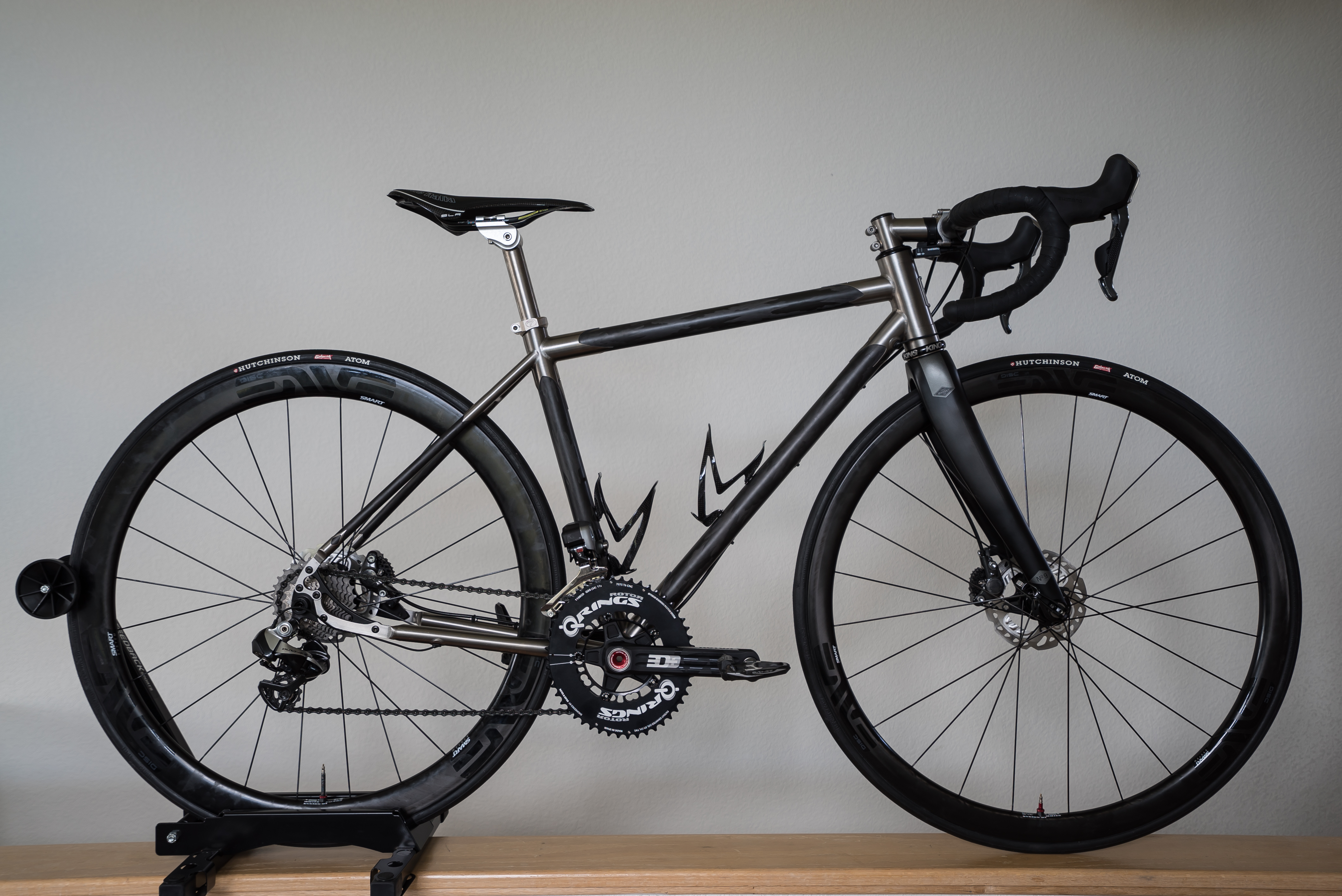
Zachary’s Evergreen SL

We built this Evergreen SL for Zachary with our good friends at the Downtube Bicycle Works in Albany, NY. Zachary is a strong, young rider, who takes his bike long distances over variable terrain to visit family and friends. Being able to pack gear was very important to him, as was the ability to do extended stretches without stopping to resupply. Note the third water bottle.

Some photos, and kind words, below:

I know it’s been a few months here since I got my new bike but I just wanted to send you both a brief update and some photos.

The evergreen rides like a dream. In stark contrast to the (name of bike removed), my other trusty steed, I am just floating up the hills effortlessly (not to dis the (other bike), it’s my tank when I need it). The bike does feel solid and familiar but is so much more agile and maneuverable.  I have since been riding very comfortably.

After the first long ride (Sdy to Cooperstown) I am hooked. I have since been enjoying weekly winter rides through the hills of Pennsylvania. I’ll be attempting a complete Brevet series (randonneuring) this spring as well. Attached is a photo of the bike and the hills around Cooperstown, NY as well as a photo of my recent ride from my home in the Pocono plateau of Pennsylvania up north to Binghamton, NY.

Thank you both for helping to build my dream bike. I am very excited to see where in New York State and Pennsylvania it will take me this upcoming summer, as well as the years and hopefully decades of riding it will bring me thereafter.

Cheers!

Zachary 


On the Road: Seattle with Cascade Bicycle Studio

sheltered from the rain

We can’t lie. It was nice to fly out of snowy Boston, even if our destination was rainy Seattle. 55F with rain is a welcome break from 10F with mountains of snow lining the roads.

We gave a Tech Talk at Cascade Bicycle Studio, delving deep into the benefits of steel, titanium and carbon, as well as looking at the latest in custom paint and talking about our Evergreen bikes and the act of Evergreening. We never tire of talking about bikes and bike riding. As usual, the questions at the end were the best par.

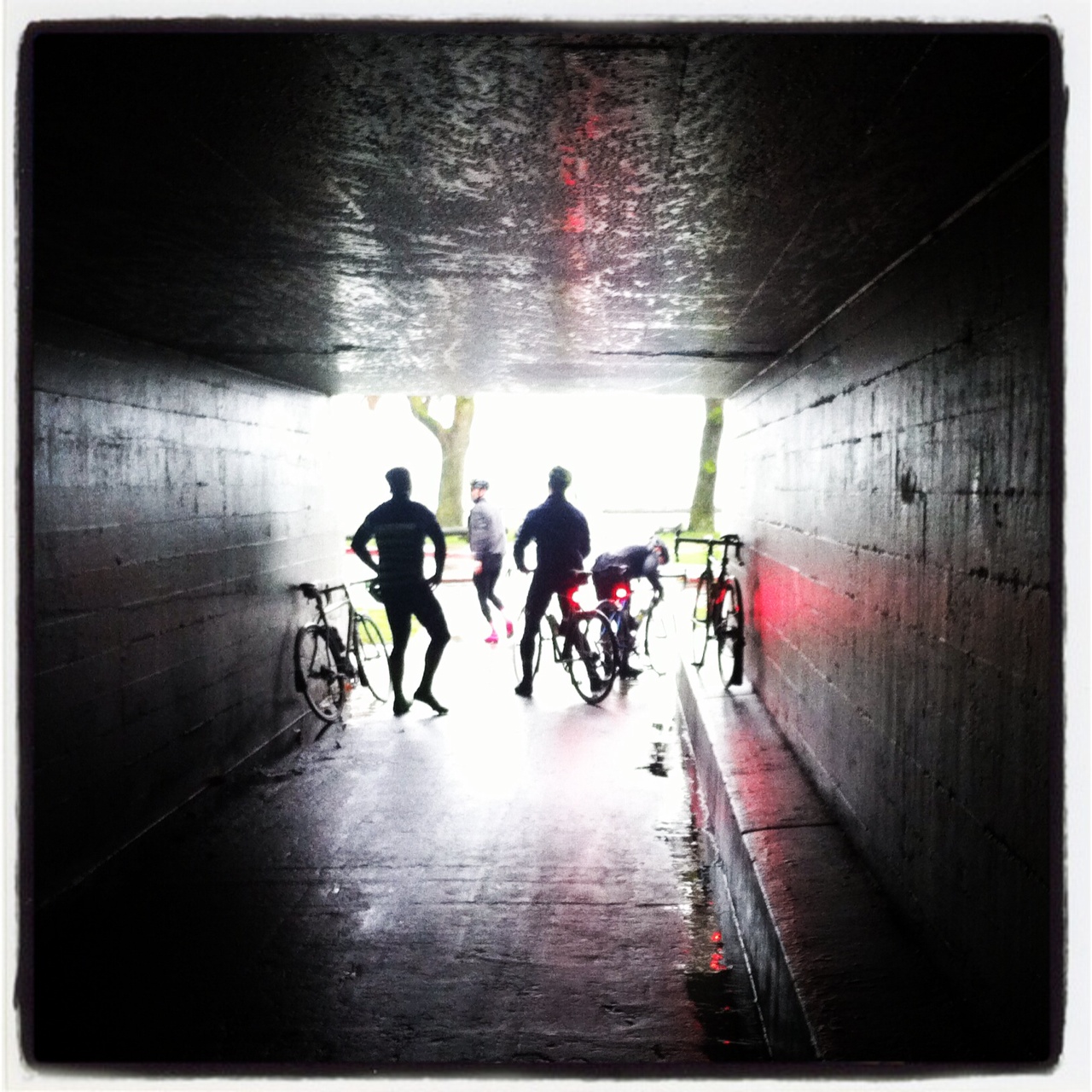
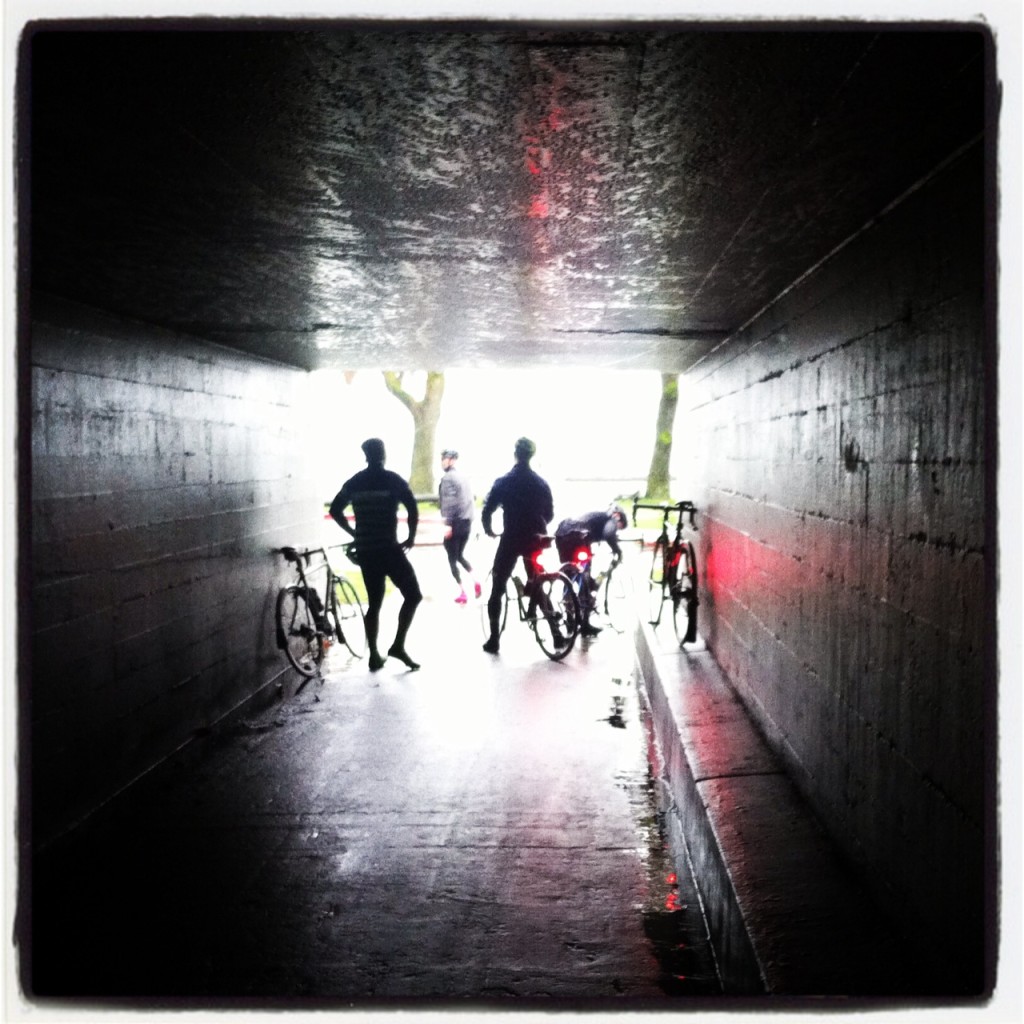
The guys at the shop were game for a ride the next morning, even though it was pouring. Sometimes the stereotypes are true, it rains a lot in Seattle, and sometimes you still have to ride your bike.

We rode up along the canal, out of Fremont. We climbed what seemed to our New England eyes like impossibly green hills. We hurtled down wet descents, trusting to our local guides. We crossed the ship locks at Ballard near the west end of Salmon Bay, walking our bikes to escape the ire of the very serious people who operate them. There were no salmon on the fish ladder, and the view was seriously compromised by low lying fog and pelting rain, but still, what a ride! We finished at the coffee shop, as you do, and warmed ourselves while we dripped dry on their nice wood floors.

It’s easy to get stuck in your bubble, thinking the rest of the world rides the way you do in the same conditions you do, but that’s not remotely true. We love visiting our friends at shops all over the world, if only to better understand why we build so many different bikes.

Race Stays for Race Days

With road season on the horizon here in the Northern Hemisphere (they’re already racing Down Under), we are turning more of our attention to the growing list of road bikes on our build schedule. For riders who like to go fast, the go-to material of the last decade has been carbon fiber, and the reason given most is its inherent stiffness. Many of the race bikes we build incorporate carbon fiber in some way, either in the rear triangle, as in our Elium SL, or more extensively, as with our 622 SLX. Those frames can be lighter than a double-butted Ti frame, though much of that difference gets lost once the bike is completely built. Light wheels and/or components make a bigger difference to overall bike weight than the frame.

All of those bikes, the Elium SL, the 622 SLX and the double-butted Axiom SL, have titanium chain stays. We think they make for a smoother, more durable bike than carbon stays, but we have wanted to be able to make them stiffer for some time.

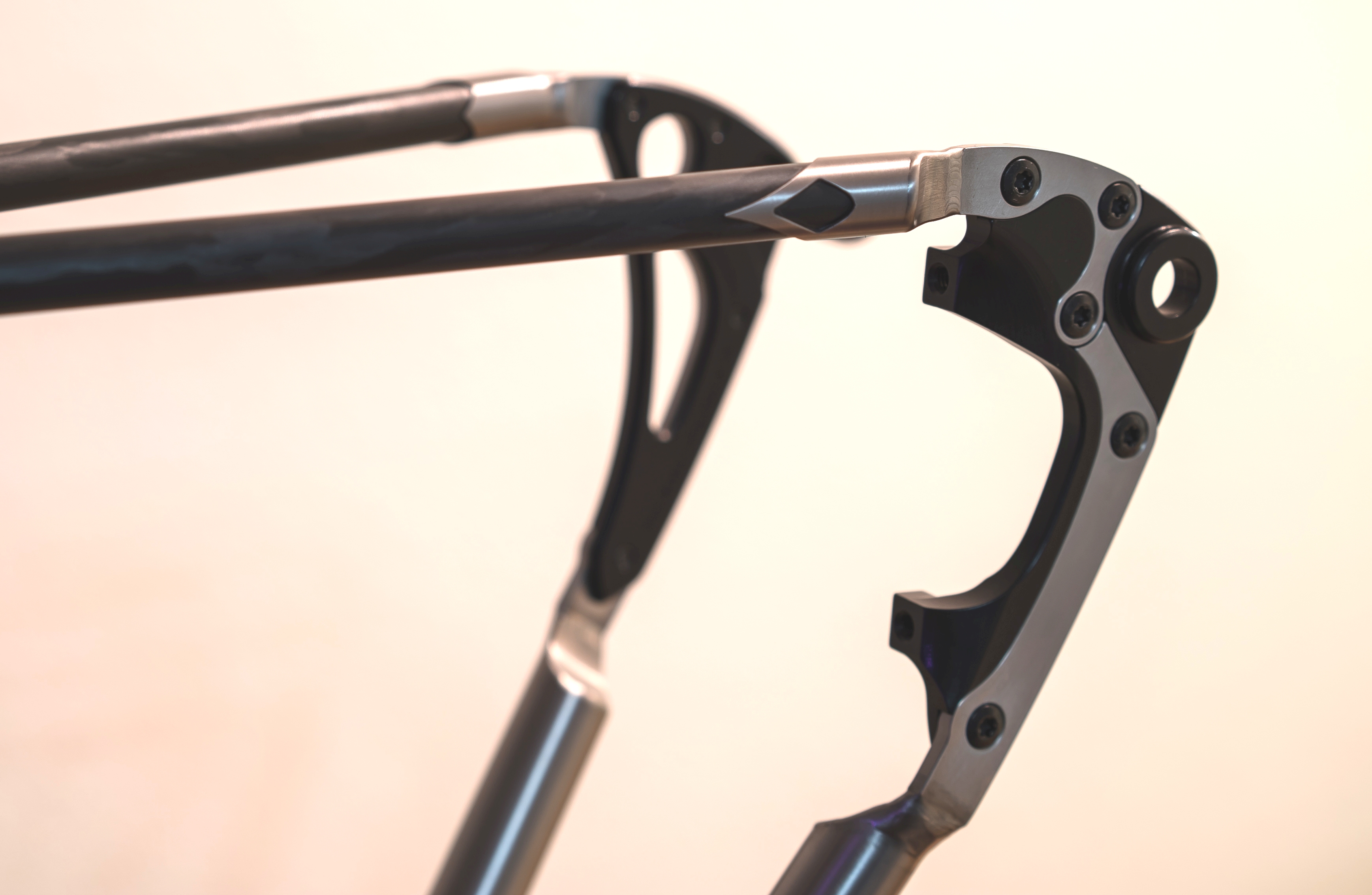
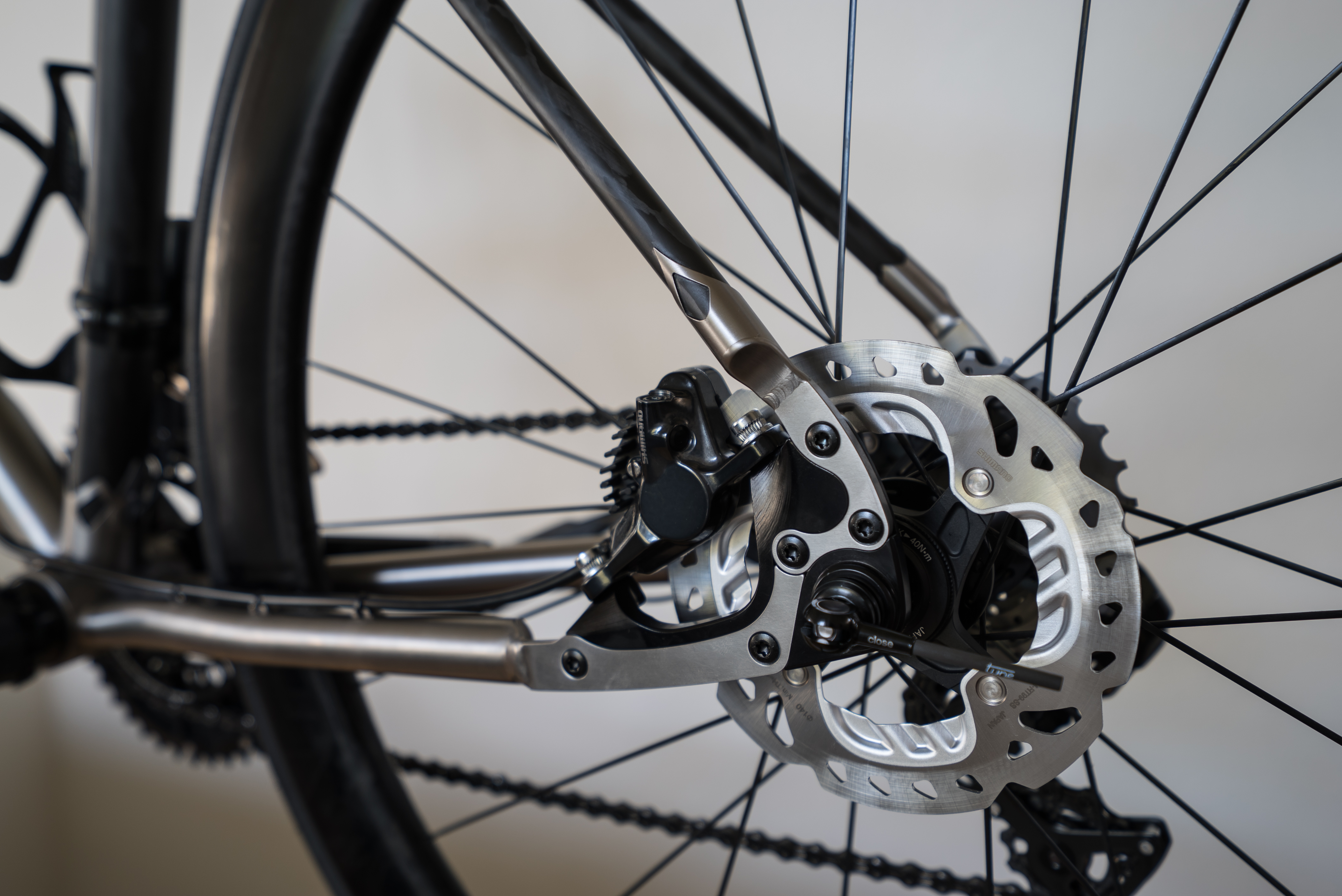
Now we are offering 1″ chain stays that will fit a tire as large as 28mm. These stays are more than 50% stiffer than a 7/8″ stay. That’s a big jump for a small gain in diameter. We are thinking of them as race stays for race days, for our riders who want all the stiffness and power transfer they can get out of their drivetrain, but also want the comfort and durability of a metal bike.

Packing a Travel Bike

We built an Axiom S with S&S couplers for Mark Slavonia with our friends at City Cycle in San Francisco. This was Mark’s third Seven, and he uses it for EVERYTHING, including a lot of travel riding. We’ve talked about packing travel bikes before, in terms of the features and benefits of the various cases, and we’ve reviewed some of the frame and component choices that make the most sense for travel bikes, but ultimately, your success and enjoyment of bike travel will come down to how easy it is for you to pack and unpack your bike.

Mark wrote up his own bike packing guide and shared it with us. He also weighs in on the merits of the various coupling systems and the cases available. It’s well worth a read.

He says, “My travel bike is  a Seven Axiom with optional S&S couplings.  It weighs 18 lbs, 2 oz. with a 60 cm frame.  The oversized titanium tubing and the stainless steel couplings make it pretty stiff overall, especially for a titanium bike.  I’d use this bike for any ride or race and I never feel compromised by it.”

Thanks to Mark for allowing us to share.

On the Road: Zand Martin Cycling the Kazakh Steppe

It’s a long time since Zand Martin came to pick up his Expat S and laid all his Russian military maps on the floor in our showroom to show us what he had planned. Over the course of the expedition (see here, here, here, here, here and here), we saw things go awry and askew as some of those maps failed to reflect a workable reality for Zand and his expedition partner. And yet, they managed to see and document so many of Central Asia’s beautiful, seldom-seen locales, and we couldn’t have enjoyed seeing those landscapes more, one of our bikes a tool that helped bring back those views.

Our On the Road series is about showcasing what riders are doing with our bikes out in the world. Zand is a different kind of rider, a true adventurer and explorer, and we count ourselves lucky to be able to share his stories with you here.

More of Zand’s lovely photos and prose below:

The road has no outlet. There is no bridge, and no ferry. The map is wrong, again. We are crushed, again. We followed the main road towards Ust-Kamenogorsk as our map had it, along the shores of the great reservoir of Bukhatarmskoye. But twenty-five kilometers from anywhere, the road turns to dirt and a branch drops to a languid shore and a rusted, abandoned ferry dock. The family smoking cigarettes on the dock offers us candy and cabbage rolls, and confirms our suspicions, pointing north to the road. “Nyet parom, nyet most,” no ferry, no bridge between here and Ust-Kamenogorsk, Oskemen in Kazakh. They indicate a barge in the lake, the ferry coming to take them west across to a road that leads to Samara. It is 240 kilometers to our railhead by that route, and when the boat docks and disgorges a small truck and two Ladas, we reluctantly wheel our bikes on board.

We had taken a leisurely lunch, knowing we would camp the night by the reservoir and then have an easy morning into Ust. There, we would reach the railhead and the end of our human-powered journey around the Altai. We were fifty kilometers away, after thousands. Moments before we were exultant, our ending close and within the easy reach of a morning’s ride. Now, we are again cast into uncertainty and high challenge. We sullenly eat crackers on a bench by the railing. A trio of weathered Russian and Kazakh men loosen the steel cable loops on the ship-side bollards, and the Odessa slips out of the dock into the narrow reservoir.

We had spent almost two weeks in the watershed, both in China, the mountains along the Austrian Road, and down in the rolling Kazakh steppe along the rivers draining to the Irtysh. Leafy villages dotted our route through the grasslands, simple settlements following a comfortable pattern: spread a handful of shops and markets along the main road, and cluster log and concrete brick houses around it with gardens and hayricks. Every town has a mosque built since the fall of the Soviet Union, often including Timurid and Persian elements like blue tile domes and large brick arched entrances. They are village affairs, humble, and tell the story of Islamic revival in Kazakhstan, encouraged from within the country, and from without.

We relish the sparse green of the villages, and eat ice creams on rickety benches while schoolchildren ask us our name and giggle at our strange accents. In Russian-influenced and settled Kazakhstan, we added cheese and butter back into our diet, along with tomato sauce and real ice cream bars. The wind, unfortunately, continued to plague us until the asphalt ran out on the outskirts of Terekty, and that new challenge gave us a reprieve until we finished the Austrian Road and returned to sealed roads. There, we pass between the mountain walls headed west. North, Siberia begins, while south, whence we came, Central Asia stretches in desert, and glacier. The wind assaulted us, again. We moved west through verdant pasture, crawling into a forty knot headwind for the tenth day. Our first night camping beyond the Austrian Road, we hide behind poplars and wake to several inches of snow. At the latitude of Seattle and the elevation of Pittsburgh.

As we near the far shore, the captain waves us up two stories to the wheel house. The sparse bridge holds a few notebooks, a throttle marked in stenciled Cyrillic, and a great wooden ship’s wheel. He shows us the controls, and jots down distances to our next town: seventy kilometers. We dock as the sun drops, and move a few kilometers on to a rise above the lake. We set tents, boil water, and settle in to our disappointment and our well-exercised muscle of moving on, laughing, and planning. In the last light, two Kazakh horsemen wander by from work in the hills along the lake. We chat, and before leaving one dismounts and urges me into the saddle. Reminiscent of childhood pony rides, the second shepherd holds my reins and we ring camp at a trot.

Of course, there’s more worth reading and seeing on Zand’s expedition 7. Check it out.